Wiregrass • Wallboard
Wet Drywall Removal and Replacement in Dothan, AL
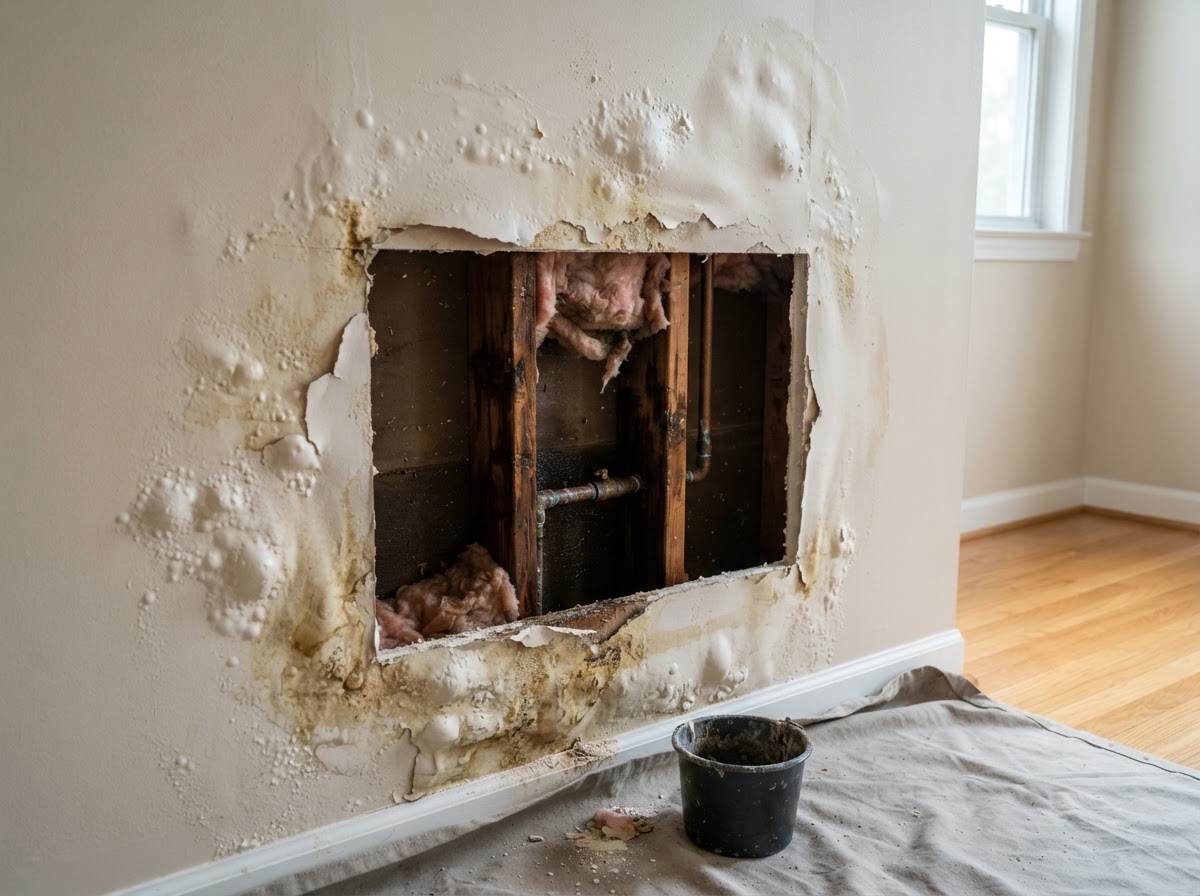
Bubbled paint, soft spots, staining, swelling, or a wall that sat through a leak all raise the same question: can this material be dried in place, or does it need to be removed and replaced? The priority is source control and safety first, then an honest decision about whether the drywall can be saved. No do-it-yourself demolition instructions are given here — cutting into saturated wall assemblies can expose wiring, plumbing, or hazardous materials.
The problem
What a wet wall tells you, and what it does not
- Water source and possible contamination
- How long the material has been wet
- Drywall condition — soft, swollen, or intact
- Wet insulation or framing behind the wall
- Repeated wetting versus a one-time event
- Finish materials — paint, wallpaper, tile, cabinetry
- Nearby electrical outlets or structural elements
Process
From source control to a wall that can be closed
A realistic sequence for wet drywall. The same provider does not automatically perform the plumbing, electrical, or rebuild work, and no code or permit exemption is implied.
Repair the source with the correct trade
A plumbing, roofing, or appliance source is stopped and repaired by the appropriate licensed trade before wall materials are closed up.Evaluate safety and contamination
The area is checked for electrical hazards, structural concerns, and contamination from the water source, which changes what can safely be dried or removed.Qualified moisture investigation
Moisture readings determine how far water has traveled up and across the wall and into the cavity, framing, and insulation behind it.Decide between retaining and removing damaged materials
Drywall that can be dried and remain sound may stay; saturated, contaminated, or structurally compromised sections are scheduled for safe removal.Containment and protection if warranted
Where removal is needed, containment and protection of occupants, belongings, and adjacent spaces are planned to manage dust and debris.Inspect and dry adjacent cavities
Before any cavity is closed, framing and insulation are inspected and dried or removed as appropriate, so moisture is not sealed back inside the wall.Coordinate qualified drywall installation, finishing, and painting
Once conditions support it, replacement, finishing, texture, and paint are performed by qualified providers as a separate scope from the mitigation.
Materials & scope
Wall types, occupancy, and finishes that change the work
What is on and behind the drywall changes how it is handled. Suspect hazardous materials are referred to qualified testing and abatement rather than handled casually.
- Painted drywall & wallpaper
- Paint can mask wet drywall beneath it, and wallpaper can trap moisture; both affect how drying or removal is approached and what finishing is needed.
- Tile backing & cabinetry
- Tile over drywall and cabinet backs can hide saturation behind them, sometimes requiring selective removal to reach and dry the wallboard beneath.
- Baseboards & trim
- Baseboards are often removed to allow drying and to inspect the lower wall and flooring junction, where moisture commonly collects.
- Insulation & ceiling assemblies
- Wet insulation loses effectiveness and can hold moisture against framing; ceiling drywall and the framing above it are inspected together.
- Multipurpose commercial walls
- Commercial wall assemblies can carry utilities, fire-rated layers, or specialty finishes that require additional coordination before any removal.
- Suspect hazardous finishes
- Where older finishes, adhesives, or coatings that may contain asbestos or lead are encountered, qualified testing and abatement are required rather than casual removal.
Frequently asked questions
Next steps
Related restoration topics
Live pages with related guidance for Dothan-area property owners.
Describe the affected walls and request an assessment
Share the rooms and walls affected, the suspected leak cause, when it was discovered, the visible extent, and whether any utilities are involved. The inquiry is reviewed — it is not a confirmed removal plan, dispatch, or service acceptance.