Wiregrass • Crawl Space
Crawl Space Water Removal in Dothan, AL
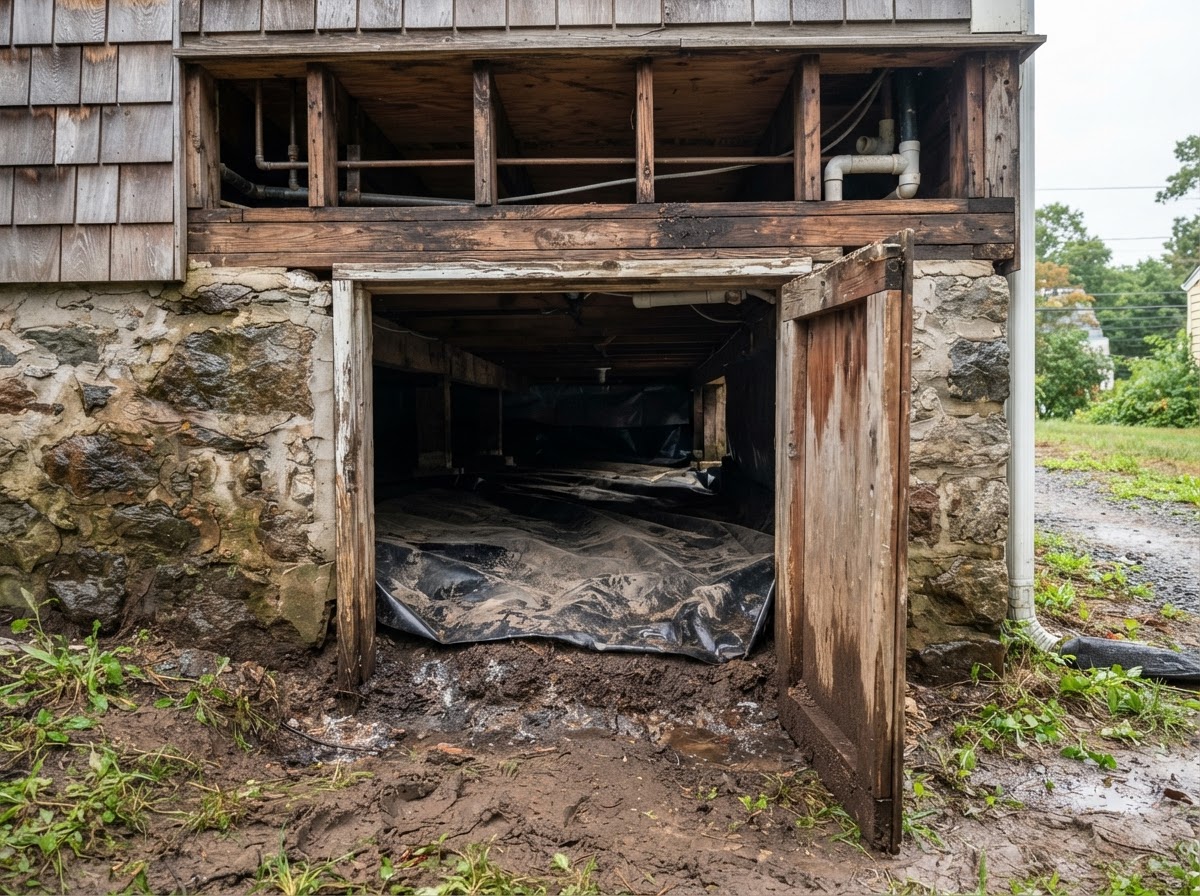
Standing water or persistent wetness beneath a house can affect wood framing, insulation, and the indoor environment above it. Crawl-space entry can be hazardous: confined conditions, limited access, and the possibility of electrical, structural, or contamination hazards mean occupants should not enter an unknown or wet space. A qualified assessment clarifies the source, what is affected, and what removal might involve. It is not an invitation to self-pump or self-inspect, and it is not a guaranteed same-day visit.
The problem
Where crawl-space water comes from, and what it can mean
- Plumbing leaks from supply or drain lines
- Surface runoff entering at openings
- Drainage or grading issues around the foundation
- Outside flooding reaching the crawl space
- Condensation or high air moisture
- Repeated wetting from an unresolved source
- Visible water at access points, damp insulation, or odors
Process
From a wet crawl space to an evaluated, dry condition
A general sequence for crawl-space water. The actual steps depend on the source, contamination, access, and the verified provider's scope.
Verify safe access and utility conditions
Before anyone enters, the access, structural soundness, and any electrical or contamination hazards are considered. Do not enter a wet, confined, or electrically uncertain crawl space to inspect it yourself.Qualified professional identifies source and extent
A provider determines where the water came from, how far it has spread, and what materials are affected — working from a safe position rather than assuming the visible water is the full extent.Determine contamination and whether removal is appropriate
Clean-source water and potentially contaminated water are handled differently. Some situations require caution or other responders before removal can proceed.Controlled water removal and material evaluation
Where appropriate, standing water is removed by a qualified provider and the subfloor, joists, and insulation are evaluated for moisture and damage.Drying and moisture checks
After removal, moisture is measured and the space is monitored to confirm conditions are returning toward dry rather than simply appearing empty.Coordinate separate source and drainage corrections
Plumbing repair, drainage, structural, or vapor and moisture management is coordinated separately as warranted. Encapsulation, pumps, or vapor-barrier replacement are not assumed to be included without verified scope.
Materials & scope
What is under the house, and why it changes the work
Material condition, contamination, and the type of water all influence the work. Recurring water requires source correction rather than extraction alone.
- Subfloor & joists
- Wood framing above standing water can absorb moisture; the subfloor and joists are checked for dampness and any structural effect.
- Insulation
- Insulation installed under the floor can hold moisture against framing and may need to be removed rather than left in place when wet.
- Vapor-retarder materials
- A vapor barrier or ground cover can trap water on top of it or beneath it; its condition is evaluated but its replacement is not automatically part of water removal.
- Ductwork & mechanical runs
- HVAC ducts and mechanical or electrical runs through the space can be affected by water or high humidity and may need separate attention.
- Limited height & access
- Shallow or obstructed crawl spaces limit how equipment and people can reach the water, which changes the removal approach.
- Debris & standing water
- Stored items, construction debris, and standing water affect what can be safely reached and removed.
Frequently asked questions
Next steps
Related restoration topics
Live pages with related guidance for Dothan-area property owners.
Describe the crawl-space water and request an assessment
Include the property location, an accessible description of where the water appears, whether the problem is recurring, any recent plumbing or storm observations, and any known hazards. Do not enter the space to gather photos. The inquiry is reviewed — it is not a confirmed dispatch or a same-day arrival.