Wiregrass • Temporary Protection
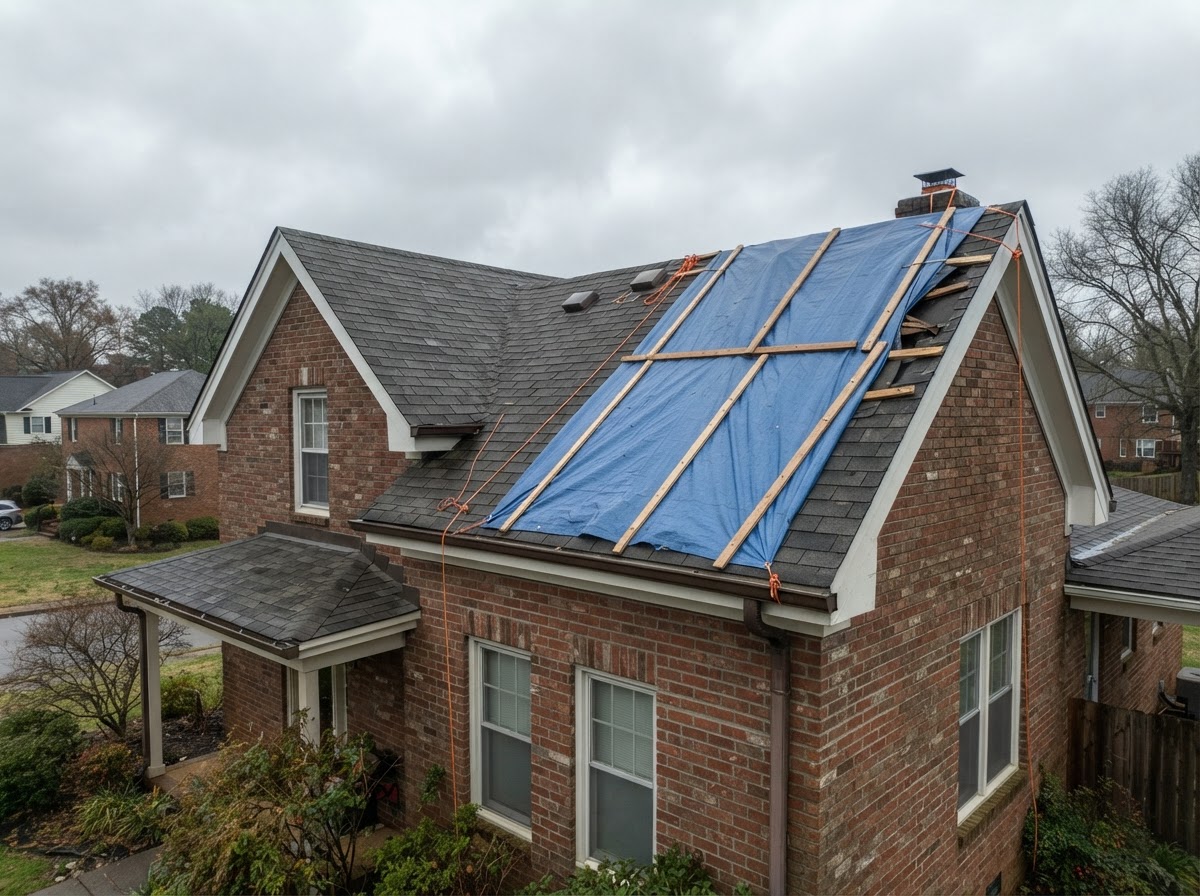
Emergency Board-Up and Roof Tarping in Dothan, AL
Broken windows, a damaged door, or an exposed roof opening can leave a property vulnerable to further weather or access issues after a storm or fire. Temporary protection is a stopgap, not a permanent repair — and the word ‘emergency’ describes the urgency of the situation, not a confirmed 24/7 dispatch. This inquiry is an assessment request, not a guaranteed response time.
The problem
When temporary protection is needed, and what it is not
- Storm-damaged roof surfaces
- Broken windows or doors
- Fire-related openings
- Vandalism or other unsafe exposure
- Exposed interior from a damaged envelope
- Wind or debris damage
- Temporary protection pending permanent repair
Process
How temporary protection is planned
A general sequence for securing a damaged opening safely. Each step depends on the structure, the access, and the qualified provider's scope — which must be verified before any direct board-up or tarping claim is published.
Obtain emergency authority clearance and safe access
Where fire, storm, or structural hazards are involved, official clearance and safe access come before any work on the property — not after.Qualified assessment of structure, utilities, weather, and height hazards
A qualified provider evaluates the structural condition, nearby utilities, the weather, and the work-at-height hazards before selecting an approach.Select a temporary protection approach within provider scope
Board-up, tarping, or another temporary method is chosen only within the verified provider's scope and the conditions — not as a one-size-fits-all fix.Safe installation by appropriately qualified personnel
Installation at height or on a damaged structure is performed by appropriately qualified personnel. No DIY roof climbing or board-up instructions are provided here.Document the limitations
The temporary protection is documented with its limits — it is not guaranteed fully weatherproof and is not a substitute for the permanent repair that follows.Coordinate later roofing, glazing, structural, and water work
Permanent roof, window, framing, and interior water-mitigation repairs are coordinated separately with the qualified trades and contractors they require.
Materials & scope
Project factors for temporary protection
Roof pitch, height, framing condition, and weather all change what is safe. Temporary systems may need inspection or replacement, and no set lifespan or permit exemption is claimed.
- Roof pitch & height
- Steep roofs and height add fall and access hazards that require qualified personnel and equipment; a damaged roof is not safe to climb without it.
- Compromised framing
- Fire or storm may have weakened framing, so the structure is evaluated before anyone loads it with work or materials.
- Glass & openings
- Broken windows and doors are boarded to secure the interior; the glazing replacement that follows is a separate trade scope.
- Wind & rain conditions
- Active weather can make temporary protection unsafe to install or ineffective until conditions allow, which changes timing.
- Occupied properties & access permission
- Occupied homes and businesses require owner or management authorization and coordination of access before any securing work begins.
- Security & insurance documentation
- Documenting the temporary protection supports the insurer conversation about mitigating further damage — without promising coverage or settlement.
Frequently asked questions
Next steps
Related restoration topics
Live pages with related guidance for Dothan-area property owners.
Describe the opening and request an assessment
Share the type of opening or damage, any known safe-access status, the general affected area, the property location, and any related interior water concerns. Do not climb or enter hazards to take photos. The inquiry is reviewed — it is not a confirmed dispatch, and board-up and tarping capacity must be verified before service is offered.