Wiregrass • Appliance Leak
Water Heater Leak Cleanup in Dothan, AL
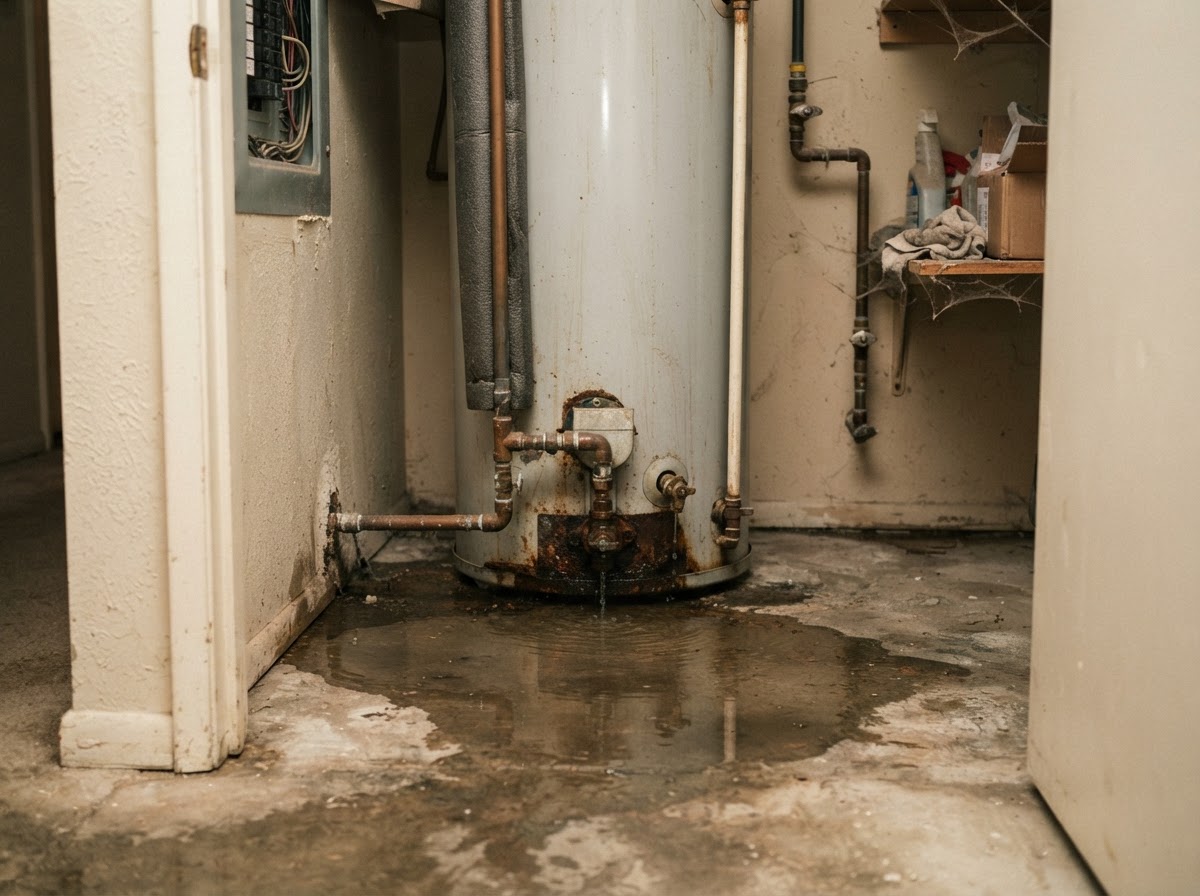
A water-heater leak may be discovered late — small drips can run for days — or it can be a larger failure that spreads into nearby materials or adjacent rooms. Stopping the appliance or plumbing source is separate from managing the building materials it wet. An assessment inquiry helps clarify the scope; it does not promise same-day service or an appliance replacement.
The problem
Where water-heater leaks begin and where they spread
- Dampness around the heater location
- Pooling at the base of the tank
- Supply line, relief valve, or pan concerns
- Water reaching a garage or utility closet
- Spread into laundry rooms or finished flooring
- Wet wall base or nearby storage
- Hidden moisture beneath floor materials
Process
Source first, then the affected materials
A new heater does not itself dry a wet wall or subfloor. Repair and restoration are separate scopes.
Assess personal safety and stop the source if safe
If it is safe, isolate the supply to the heater. Do not touch gas or electrical controls if water or hazards are present.Qualified plumber or appliance professional
A licensed professional diagnoses the leak, repairs or replaces the heater or fitting, and addresses any code or permit questions.Evaluate migration into adjacent materials
Inspect the floor, wall base, insulation, and nearby storage for water that traveled beyond the heater.Safe extraction and moisture assessment
Where appropriate, standing water is removed and moisture is measured in the surrounding materials.Controlled drying and cleaning
Based on findings, controlled drying and cleaning address hidden moisture and affected surfaces.Coordinate finish repair separately
Drywall, flooring, and finish replacement are a separate rebuild scope, not part of drying itself.
Materials & scope
Materials and scope around a utility-space leak
Leak duration, surface porosity, drainage, and access all shape the cleanup. Heater repair and restoration are distinct.
- Concrete vs. finished flooring
- Concrete garage floors may shed water; finished flooring nearby can absorb it.
- Baseboards & drywall
- Water at the base of a wall can wick into drywall and baseboards even in a small leak.
- Cabinets & closets
- Enclosed closets and adjacent cabinetry can hold moisture against their backs.
- Stored belongings
- Items stored near the heater can be damaged or hold moisture.
- Adjacent units
- In multifamily buildings, a heater leak can affect the unit below or beside.
- Hidden subfloor moisture
- Water beneath finished flooring can remain after the surface appears dry.
Frequently asked questions
Next steps
Related restoration topics
Live pages with related guidance for Dothan-area property owners.
Describe the water-heater leak
Tell us the heater location, the apparent leak duration, the visible wet surfaces, whether a plumber has addressed the source, and the property address. The inquiry is reviewed — it is not a confirmed appointment, dispatch, or service acceptance.