Wiregrass • Ceiling Damage
Ceiling Water Damage Repair in Dothan, AL
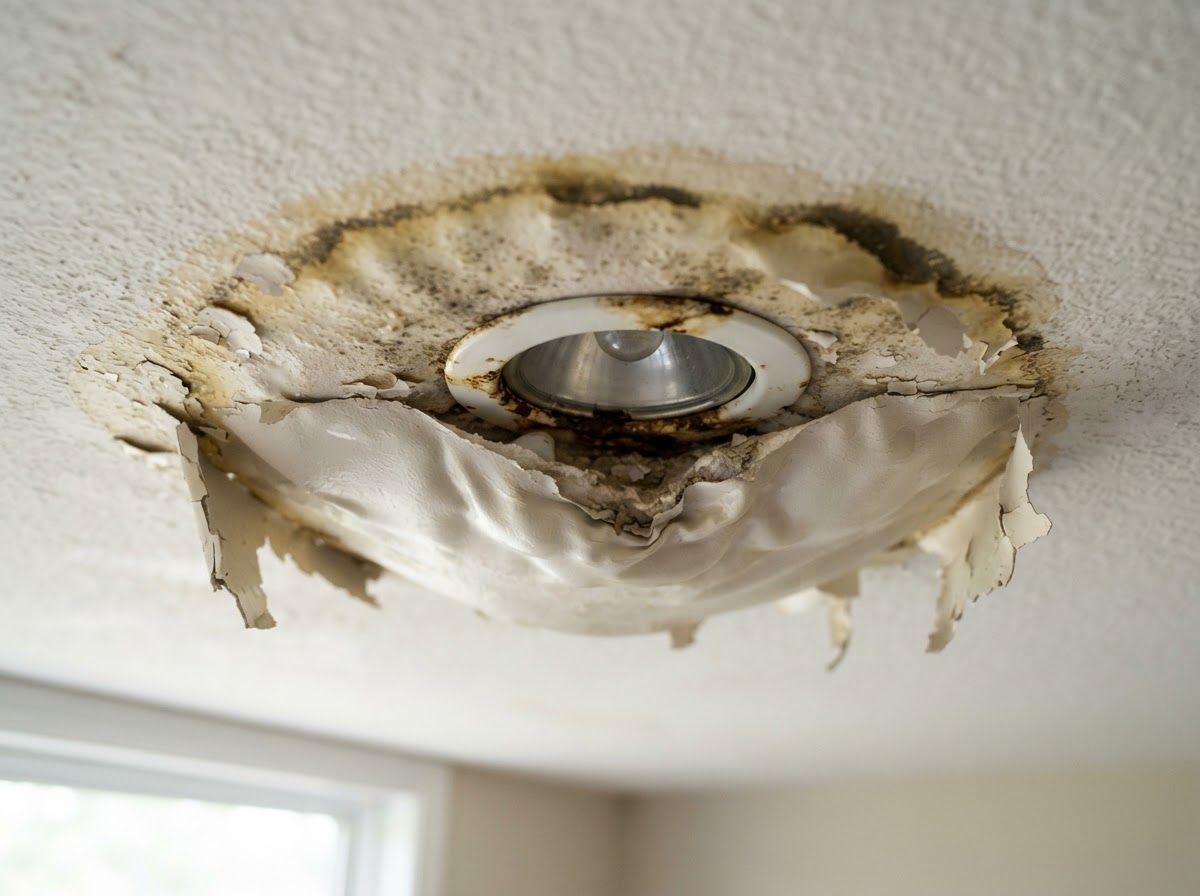
Water stains, peeling paint, sagging drywall, or an active drip from a ceiling are signs that moisture has reached overhead materials — and that the source may still be unresolved. Repairing the appearance before the source and the wet materials are addressed often fails. A restoration assessment clarifies what is wet, what is safe, and what comes next. It is not a guaranteed repair or a same-day visit.
The problem
Symptoms, possible causes, and when safety changes the answer
- Roof intrusion from above
- Upper-level or second-story plumbing
- Bathroom or fixture leaks
- HVAC condensate or AC drain issues
- Other moisture paths traveling along framing
- Staining, bubbling, soft, or sagging surfaces
- Recurring spots that reappear after rain or use
Process
From source identification to a repaired, dry ceiling
Source identification comes first; no finish repair is durable until the moisture source and the wet materials are addressed. The order depends on the cause, the materials, and the verified provider's scope.
Make source identification a prerequisite
Whether the water came from a roof, an upstairs plumbing line, or an HVAC system, the source must be identified and stopped before ceiling materials can be reliably repaired.Isolate unsafe areas
If a ceiling is sagging, bulging, or near electrical fixtures, keep the area clear and have it evaluated for safety before anyone works beneath it.Have the appropriate trade evaluate the source
Roofing, plumbing, or HVAC work is performed by the qualified trade for that system. Restoration does not include diagnosing or repairing those sources.Inspect moisture in ceiling materials, insulation, and cavities
Beyond the visible stain, drywall, insulation, and the space above the ceiling are checked for moisture that may not be apparent from below.Decide drying, removal, or replacement
Some ceilings can be dried and monitored; saturated, softened, or contaminated sections may need to be opened or removed rather than painted over.Finish restoration and document before closing cavities
Drywall finishing, texture matching, and paint are a separate scope performed after the material is dry. The condition is documented before cavities are closed so hidden moisture is not sealed in.
Materials & scope
Ceiling materials, finishes, and what a repair can and cannot hide
Superficial paint can hide unresolved moisture, and a repaired texture or color may not match exactly. The scope depends on the source, saturation, contamination, and access.
- Painted drywall & plaster
- Drywall and plaster respond differently to saturation; both can wick water and soften, and painted surfaces can hide dampness behind them.
- Texture matching
- Ceiling texture and finish can be difficult to match exactly after a section is repaired; a patched area may be visible even when the structure is sound.
- Insulation above the ceiling
- Insulation in the ceiling cavity can hold moisture against framing and is often checked or removed rather than left in place when wet.
- Joists & framing
- Wood framing above the ceiling can remain damp after the source is stopped; moisture is checked before finishes are reapplied.
- Recessed lights & fans
- Fixtures set into a wet ceiling can involve electrical hazards; they are not touched until the area is evaluated for safety.
- Adjacent walls & upper floors
- Water from an upper floor can track down walls and into lower ceilings, so the affected area can extend beyond the room where the stain appears.
Frequently asked questions
Next steps
Related restoration topics
Live pages with related guidance for Dothan-area property owners.
Describe the ceiling damage and request an assessment
Include the ceiling location, the visible changes (stain, sag, drip), a suspected source if known, whether dripping is active, and whether there are electrical fixtures nearby. The inquiry is reviewed — it is not a confirmed repair or a same-day arrival.