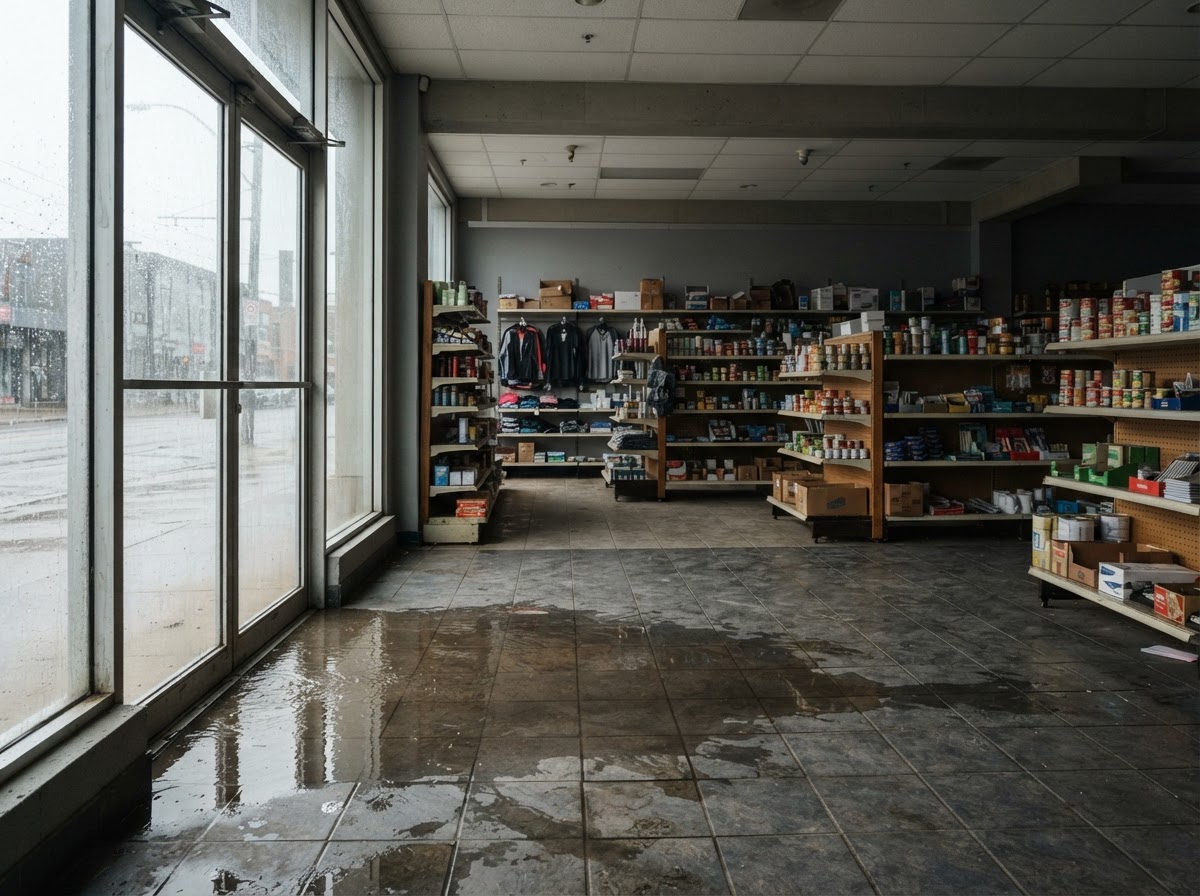
Wiregrass • External flooding
Commercial Flood Cleanup in Dothan, AL
When water enters a storefront, storage area, office, or mixed-use building from outside, the first concerns are safety and contamination — not simply pumping it out. An appropriate professional assessment helps clarify what the water may have contacted, which materials can be addressed, and what access restrictions apply. Submitting the form here is an assessment inquiry, not a declaration of site safety, emergency response, or a claim that crews are currently on standby.
The problem
What makes outside flooding a different conversation
- Heavy rainfall and surface runoff
- Overwhelmed or blocked drainage
- External water entry at openings
- Storm-related accumulation
- Porous finishes and subfloor exposure
- Equipment and inventory contact
- Shared service systems and mechanical rooms
Process
From a flood concern to a documented cleanup plan
A general sequence for a commercial flood concern. Whether each step applies depends on the water source, the contamination, the materials, and the qualified provider's scope — which must be verified before any service claim is published.
Verify access, safety, and any official restrictions
Where outside flooding is involved, access may depend on official clearance and on whether utilities can be safely evaluated. Do not re-enter until the area is confirmed safe by the appropriate authority.Identify water origin and extent
The source is identified from a safe position and the affected area is mapped, recognizing that floodwater can travel farther than the visible line and into cavities and below-floor spaces.Appropriate contamination and utility evaluation
Qualified professionals evaluate the contamination category and check electrical, mechanical, and structural conditions before anyone proceeds — not by appearance alone.Safe removal and appropriate disposal
Water removal and waste handling are performed by qualified providers. Hazardous or contaminated waste disposal requires verified qualifications; this page does not advertise that capability without confirmation.Material protection and cleaning
Porous and nonporous materials are addressed differently — some are cleaned, others removed and disposed of appropriately — based on the water category and exposure, not a universal salvage rule.Moisture assessment and controlled drying
After the standing water and contaminated materials are addressed, remaining moisture is assessed and dried under appropriate monitoring before any finish or rebuild work begins.Document scope and coordinate repair separately
Photos, readings, and written scopes organize the owner/insurer/vendor discussion, and reconstruction is coordinated as a distinct scope from the cleanup — without promising coverage or a fixed reopening date.
Materials & scope
Facility and insurance considerations after flooding
Ground-floor and below-grade spaces, stock, and records carry different salvage and access questions. Flood coverage may differ from other property insurance, and no automatic payout or reopening date is promised here.
- Loading & storage rooms
- Below-grade and ground-level storage can hold standing water and contamination longer than upper floors; access and ventilation affect how the area is addressed.
- Merchandise & records
- Porous stock and paper records exposed to outside floodwater are commonly not salvaged; nonporous items may be cleaned depending on conditions — evaluated, not assumed.
- Floor transitions & subfloor
- Flooring that looks intact on the surface can hide a saturated subfloor or underlayment; the layer beneath is assessed separately from the finish above.
- Restrooms & mechanical rooms
- Shared restrooms and mechanical spaces can be reached by floodwater and may involve electrical or equipment hazards that require qualified evaluation before entry.
- Occupied workplaces
- Staff and visitor access depends on the actual hazard and the authorized facility decision; some areas may need to close during assessment or cleanup.
- Insurance & reopening
- Flood coverage may be separate from standard commercial property insurance and depends on policy terms, endorsements, and the documented cause. No automatic payout, coverage determination, or fixed reopening date is promised.
Frequently asked questions
Next steps
Related restoration topics
Live pages with related guidance for Dothan-area property owners.
Describe the flood concern and request an assessment
Share the water source if known, the property location, the affected operational areas, any official access restrictions, the utilities and occupancy status, and the authorized contact role — from a safe position only. The inquiry is reviewed; it is not confirmed cleanup dispatch, a coverage decision, or a reopening date. Flood cleanup and contaminated-waste capacity must be verified before service is offered.