Wiregrass • Hospitality
Hotel Water Damage Restoration in Dothan, AL
A leak in a hotel is not just a maintenance item — it can touch guest rooms, corridors, lobbies, meeting spaces, and back-of-house areas across more than one floor. A practical assessment inquiry helps hotel leadership and facilities contacts clarify the affected rooms, the access and privacy considerations, and how the work might be sequenced with operations — without promising every room stays open, no revenue is lost, or a preferred-vendor relationship exists.
The problem
How water affects a hotel differently
- Guest bathroom and plumbing overflows
- Laundry and supply-line or appliance incidents
- Roof or ceiling intrusion
- HVAC condensate and multi-floor migration
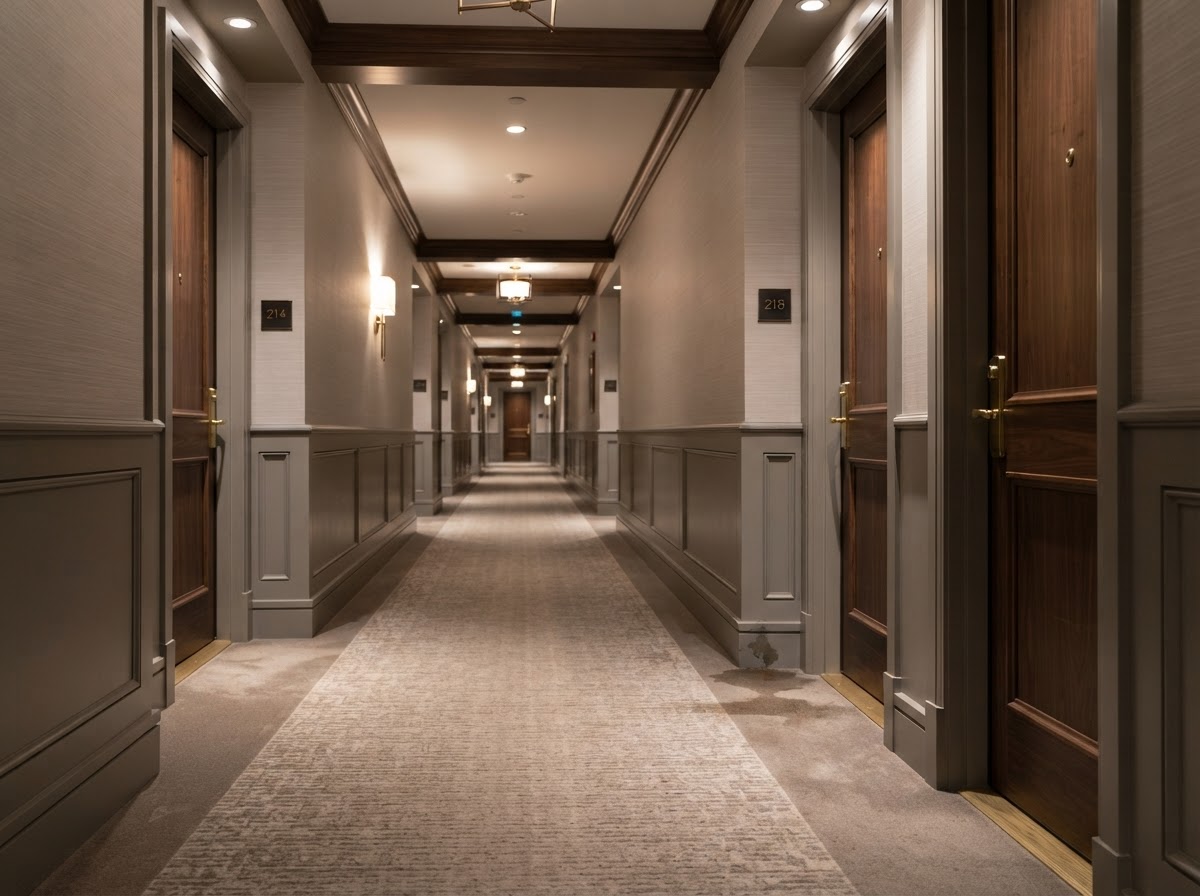
- Guest rooms, corridors, lobbies, and meeting spaces
- Laundry, storage, and food-service-adjacent areas
- Cosmetic stains versus concealed moisture
Process
From a hotel concern to a sequenced plan
A general sequence for a hotel water-damage assessment. Whether each step applies depends on the source, the floors affected, the occupancy, and the qualified provider's scope — which must be verified before any service claim is published.
Confirm management authorization
The inquiry is reviewed with authorized hotel leadership or facilities management, and work is coordinated through the appropriate contact — not assumed by this website.Address guest and public safety
Where water is near electrical systems, a ceiling is unstable, or a hazard is present, the area is avoided and qualified professionals are engaged before anyone proceeds.Source repair by the appropriate trade
The plumbing, HVAC, roof, or appliance source is diagnosed and repaired by a qualified professional — separate from the mitigation of the materials the water reached.Impacted room and zone mapping
Rooms, corridors, and back-of-house areas are mapped, including vertical and horizontal spread that may not be visible from the origin room.Moisture and material evaluation
A qualified evaluation assesses carpet, wallcoverings, ceilings, and subfloor for moisture and condition — distinguishing cosmetic stains from concealed moisture that requires drying or removal.Extraction, drying, or selective removal
An appropriate plan for water removal, controlled drying, or selective material removal is developed from the findings — not a fixed equipment count or universal room turnaround time.Documentation and qualified repair coordination
Photos, readings, and written scopes support the owner/insurer/vendor discussion, and finish and trade repairs are coordinated as a separate scope with the appropriate providers.
Materials & scope
Operations, guest privacy, and scheduling
Room inventory, turnover, corridors, and shared amenities add occupancy and privacy considerations. No revenue protection, fixed reopening time, or unverified confidentiality claim is promised here.
- Room inventory decisions
- Affected rooms may need to be taken out of inventory; the number and duration depend on the actual conditions and the authorized decision, not a guarantee.
- Check-in / check-out periods
- Work is sequenced around turnover where possible, but a hazard present may require immediate action regardless of occupancy; scheduling is coordinated with management.
- Corridors, elevators & guest movement
- Hallways and shared circulation affect more than one room; cordons, signage, and alternate routing are coordinated with the authorized contact.
- Noise & housekeeping coordination
- Drying-equipment noise, housekeeping, laundry, and maintenance scheduling interact with guest experience; the plan adapts, but some work cannot wait where a hazard exists.
- Meetings & public access
- Lobbies, meeting spaces, and food-service-adjacent areas add event and guest-traffic considerations; specialized food-safety work is not claimed without verified capacity.
- Records & insurer communication
- Room-by-room records, finish matching, and insurer/vendor communication support the discussion — without promising revenue protection, a fixed reopening time, or confidentiality technology that is not verified.
Frequently asked questions
Next steps
Related restoration topics
Live pages with related guidance for Dothan-area property owners.
Describe the hotel concern and request an assessment
Share the property location, the authorized manager role, the number and types of affected areas, any guest access constraints, the source status, and the preferred business contact method. The inquiry is reviewed; it is not confirmed dispatch, a revenue-protection guarantee, or an authorization to access occupied rooms. Hotel-specific capacity and the contracting/routing arrangement must be verified before service is offered.