Wiregrass • Multi-unit coordination
Apartment and Multifamily Water Damage in Dothan, AL
When water begins in one apartment and affects another, or a shared plumbing line fails in a common area, the questions multiply quickly: who authorizes entry, which units are actually affected, how are residents informed, and what documentation supports the owner, manager, and insurer. A clear assessment inquiry helps a coordinator review the scope before follow-up — without implying an automatic right of entry, a dedicated apartment program, or that every resident can stay in place during the work.
The problem
How water moves through multifamily buildings
- Upstairs bathrooms and supply lines
- Water heaters, laundry, and appliance leaks
- Roof or ceiling intrusion across units
- Shared risers and plumbing chases
- Floors, ceilings, and walls between units
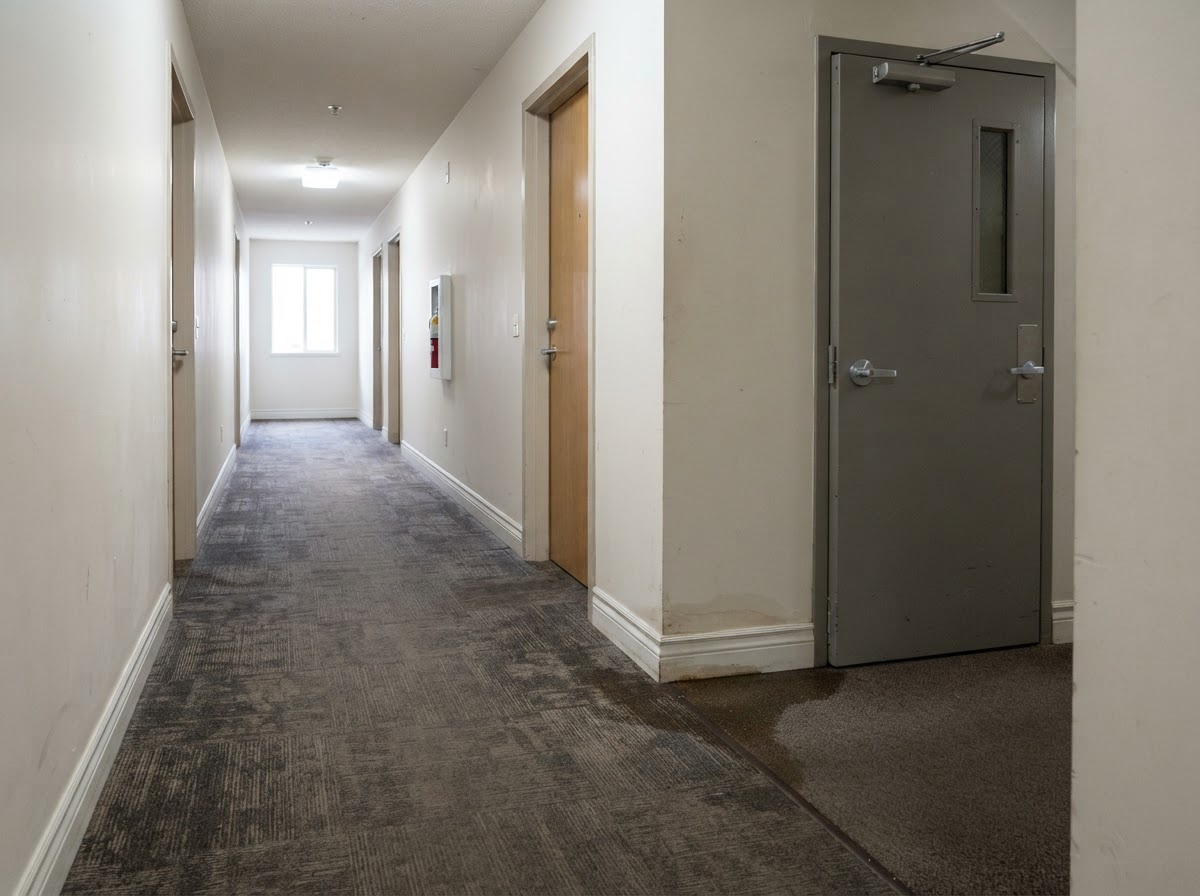
- Corridors, stairwells, and common areas
- Subfloors, cabinets, and resident belongings
Process
From a multi-unit concern to a coordinated plan
A general sequence for a multifamily water-damage assessment. Whether each step applies depends on the source, the number of units, the occupancy, and the qualified provider's scope — which must be verified before any service claim is published.
Confirm property-contact authority and access
The inquiry is reviewed with the authorized property contact, and entry is arranged only with appropriate permission and where the area is safe to enter.Identify and repair the source with the right trade
A qualified plumber or other trade diagnoses and repairs the supply line, riser, appliance, or roof source — separate from the mitigation of the materials the water reached.Map units and common areas potentially affected
Water can travel beyond the unit of origin through ceilings, walls, and pipe chases; the affected area is mapped rather than assumed from the visible stain.Plan documentation, extraction, and material review
Appropriate water removal, drying, and material-condition decisions are developed from the findings — not a fixed equipment count or universal drying time.Coordinate vendor access and resident communication
Unit entries, vendor access, and resident notices go through authorized channels; this page does not grant an automatic right of entry or promise that all residents can stay in place.Separate build and finish coordination
Drywall, flooring, trim, and cabinetry repairs are coordinated as a separate scope with the appropriate providers and approvals, distinct from the mitigation.
Materials & scope
Occupancy, security, and scope
Occupied apartments, vacant turns, and shared corridors add access, noise, and personal-property considerations. No tenant disruption guarantee is made, and verified legal questions are reserved for a later resource.
- Occupied apartments
- Residents may need to be informed, accommodated, or temporarily relocated depending on the hazard; the decision rests with the authorized contact and, where relevant, qualified professionals.
- Vacant turns & shared stairwells
- Empty units and common circulation can be used to stage or sequence work, but access still requires authorization and respects security and personal property.
- Utility shutoffs & noise
- Water, power, or equipment shutdowns and drying-equipment noise affect more than one household and are coordinated with the authorized contact; they are not assumed to be possible in every case.
- Restricted hours
- Scheduling around quiet hours, pets, and personal property is part of the plan, but some work cannot wait where a hazard is present.
- Personal property & security
- Resident belongings and unit security are handled carefully; building components and personal property are addressed as separate considerations, not the same scope.
- Records & coordination
- Managers may need separate resident, owner, insurer, and vendor records; this page does not collect tenant confidential data through the general form or promise no disruption.
Frequently asked questions
Next steps
Related restoration topics
Live pages with related guidance for Dothan-area property owners.
Describe the multi-unit concern and request an assessment
Share the property or management organization, the authorized contact role, the number and type of potentially affected units, the common areas involved, the source status, and any access restrictions. The inquiry is reviewed; it is not a confirmed dispatch, an entry authorization, or a determination of financial responsibility. Multifamily restoration capacity and the contracting/routing arrangement must be verified before service is offered.