Wiregrass • Workplace moisture
Commercial Mold Remediation in Dothan, AL
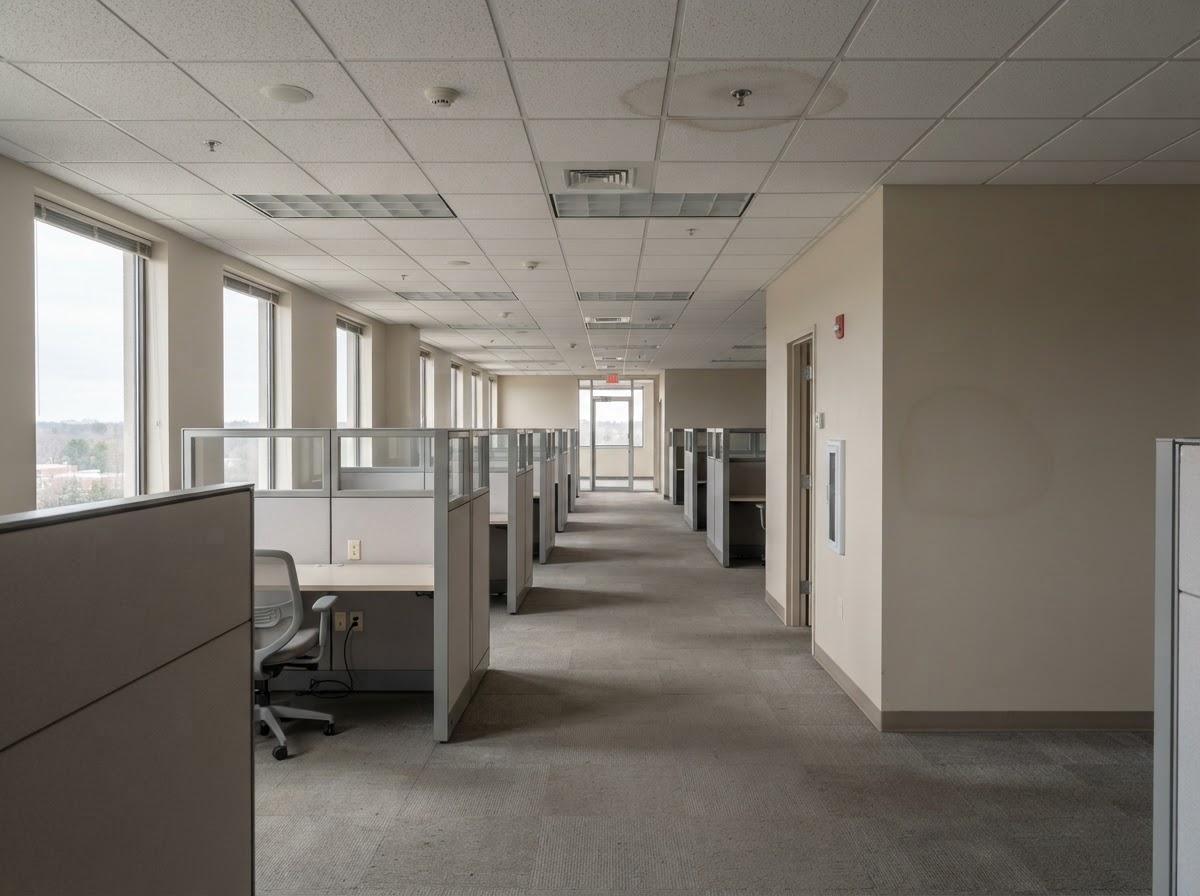
Visible growth, a recurring odor, or materials left wet after a leak can all be reasons to take a closer look at a workplace or managed property. A site-specific evaluation can help clarify which areas warrant investigation, what containment may be appropriate, and how the work might be coordinated with occupants — without claiming the business can stay fully open or that occupants are safe during the project. Submitting the form here is an assessment inquiry, not a confirmed remediation schedule or a laboratory diagnosis.
The problem
Where commercial mold concerns come from, and what they are not
- Roof, plumbing, or HVAC moisture
- Leaks above ceilings or behind walls
- Mechanical-closet and condensation areas
- Repeatedly damp wall or cavity areas
- Hidden moisture pathways between tenants
- Visible growth versus odor versus staining
- Occupant complaints and access questions
Process
From a moisture concern to a qualified project plan
A general sequence for a commercial mold concern. Whether each step applies depends on the moisture source, the building, the occupancy, and the qualified provider's scope — which must be verified before any remediation or clearance claim is published.
Correct the source through the appropriate trade
Lasting remediation depends on first addressing the moisture source — roof, plumbing, or HVAC — through a qualified professional. Treating surfaces without correcting moisture does not address the underlying condition.Clarify owner authorization and the objective
The property-owner contact confirms the objective and the scope of authority for the work, including how tenants, departments, and occupants will be informed and accommodated.Qualified investigation
A qualified evaluation assesses the visible and concealed moisture, the affected materials, and whether sampling is justified for the specific question being asked.Containment and work-area protection
Where appropriate, containment and work-area protection are planned and installed by a qualified provider to limit spread during remediation — not assumed to be needed in every case.Cleaning, removal, and debris control
Affected materials are cleaned or removed and debris is managed through appropriate processes, with no claim of proprietary chemicals, universal protocols, or complete spore elimination.Drying and documentation
Remaining moisture is corrected and the work is documented where warranted, so the owner, manager, and insurer can review the scope and limitations.Follow-up evaluation by an appropriate separate party
Where agreed, follow-up testing or clearance verification is performed by an appropriate and independent party — not necessarily the same provider that performed the remediation.
Materials & scope
Occupancy, tenants, and documentation
Public areas, offices, leasing spaces, and shared HVAC-adjacent areas add access, communication, and confidentiality considerations. Remediation does not guarantee the business stays open or that all spores are eliminated.
- Public areas & offices
- Lobbies, leasing spaces, and offices add visitor and staff-traffic considerations; work zones may need to be secured or scheduled around occupancy where hazards are present.
- Shared HVAC-adjacent areas
- Mechanical spaces and duct-adjacent cavities can move moisture — and potentially spores — between areas, which is evaluated as part of the investigation.
- Secure work zones & communication
- Containment, signage, and advance notice to tenants, departments, and staff are coordinated with the authorized facility contact; access to records and restricted areas is respected.
- Sensitive occupants
- Some occupants may be more affected by disruption or by the work itself; relocation or scheduling decisions rest with qualified professionals and the authorized decision-maker, not this website.
- Confidentiality of complaints
- Employee or tenant complaints and related records are handled with appropriate care; this page does not request health records through the general inquiry form.
- Scope & limitations
- A written scope records what was assessed, what was done, and the limitations — rather than promising mold will never return or that the building is certified clear of every spore.
Frequently asked questions
Next steps
Related restoration topics
Live pages with related guidance for Dothan-area property owners.
Describe the workplace concern and request an assessment
Share the facility type, the authorized contact role, the affected zones, the water or moisture history, and any occupancy or access constraints — without employee health records. The inquiry is reviewed; it is not a confirmed remediation schedule, a clearance statement, or a guarantee the business can stay open. Commercial mold capacity and the contracting/routing arrangement must be verified before service is offered.