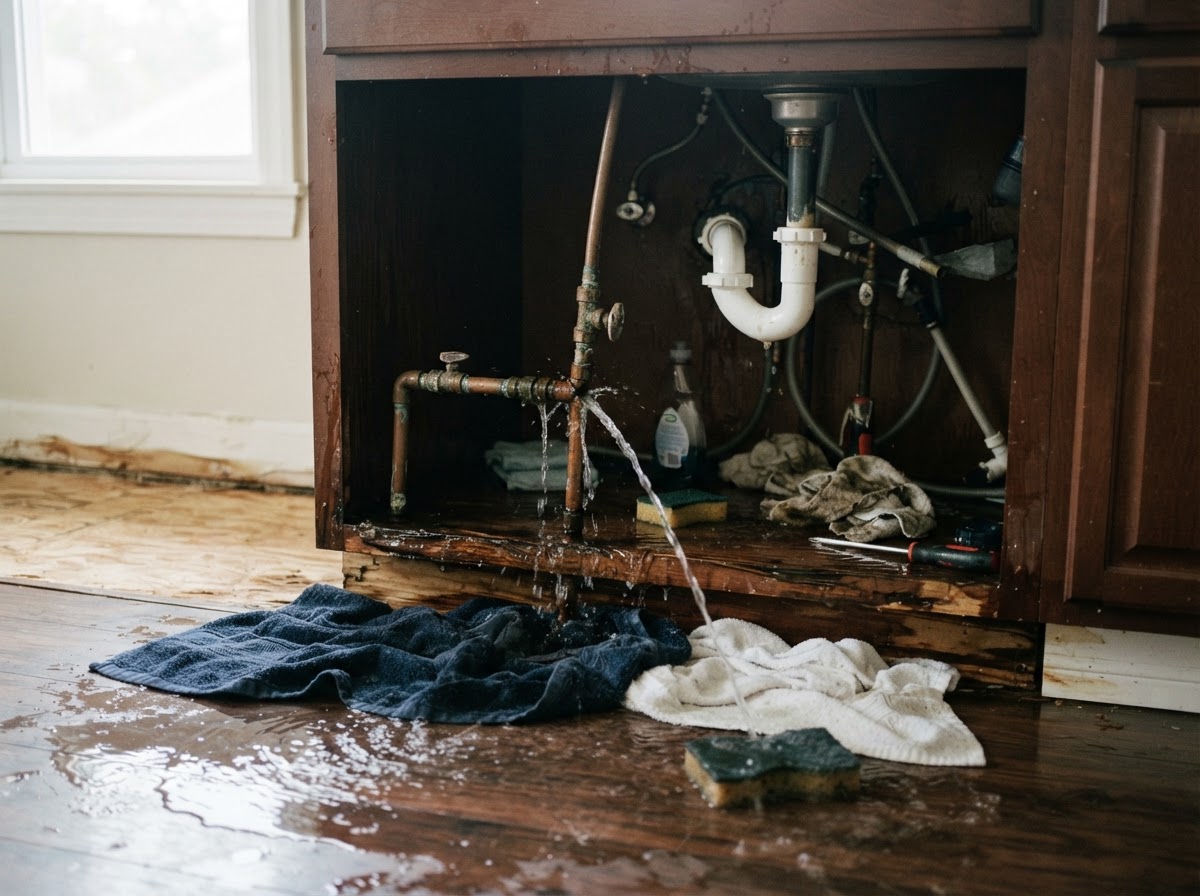
Wiregrass • Plumbing Failure
Burst Pipe Water Damage in Dothan, AL
A sudden pipe failure raises two separate questions: how to stop the plumbing source safely, and how to evaluate the rooms and materials it wet. Drying cannot substitute for fixing the leak. An assessment inquiry helps clarify the affected scope — it does not deploy a crew or promise a response time.
The problem
Signs of a pressurized plumbing failure
- Visible pipe rupture or split
- Water from walls, ceilings, or cabinets
- Unexpected pooling on floors
- Soaked trim, baseboards, or cabinetry
- Softened or bubbled finishes
- Dampness in adjacent rooms
- Concealed leaks traveling along framing
Process
Stopping the source, then addressing the damage
Source control and restoration are separate scopes. Drying wet materials does not fix the pipe that wet them.
Isolate the water supply if safe and accessible
Only if you can reach the shutoff safely, turn off the water to the building or the affected line. If the area is unsafe or you cannot reach it, do not enter.Licensed plumbing evaluation and repair
A plumber diagnoses and repairs or replaces the failed pipe. This is a plumbing scope, separate from restoration.Safety checks near electrical areas
If water reached outlets, fixtures, or panels, avoid those areas and involve the appropriate utility or electrician.Document affected spaces
Photograph the source, the water path, and affected materials if it is safe to do so.Moisture mapping where qualified
Moisture meters and thermal imaging locate water that traveled behind walls or between floors.Water removal, drying, and monitoring
Appropriate extraction and controlled drying follow, with monitoring until target conditions are met.Material decisions and separate rebuild scope
Material replacement and finish work are a separate restoration or reconstruction scope, not automatically included.
Materials & scope
How plumbing routes shape the damage
Because pressurized water travels, a single failure can affect materials far from the break.
- Ceiling cavities
- A second-floor leak can saturate the ceiling and framing below.
- Multiple floors
- Water can run along framing and appear on a lower level.
- Cabinets
- Water wicks into cabinet backs and toe kicks where it is hard to dry.
- Hardwood & laminate
- Pressurized water can cup hardwood and delaminate engineered or laminate flooring.
- Carpet & pad
- Padding is often removed; carpet salvage depends on water category and duration.
- Neighboring units
- In multifamily buildings, a leak in one unit can affect adjacent units — coordinate with property management.
Frequently asked questions
Next steps
Related restoration topics
Live pages with related guidance for Dothan-area property owners.
Tell us about the burst pipe
Include the suspected source, whether the flow has stopped, the floors or rooms affected, the approximate discovery time, and the address. The inquiry is reviewed — it is not a confirmed dispatch or service acceptance.