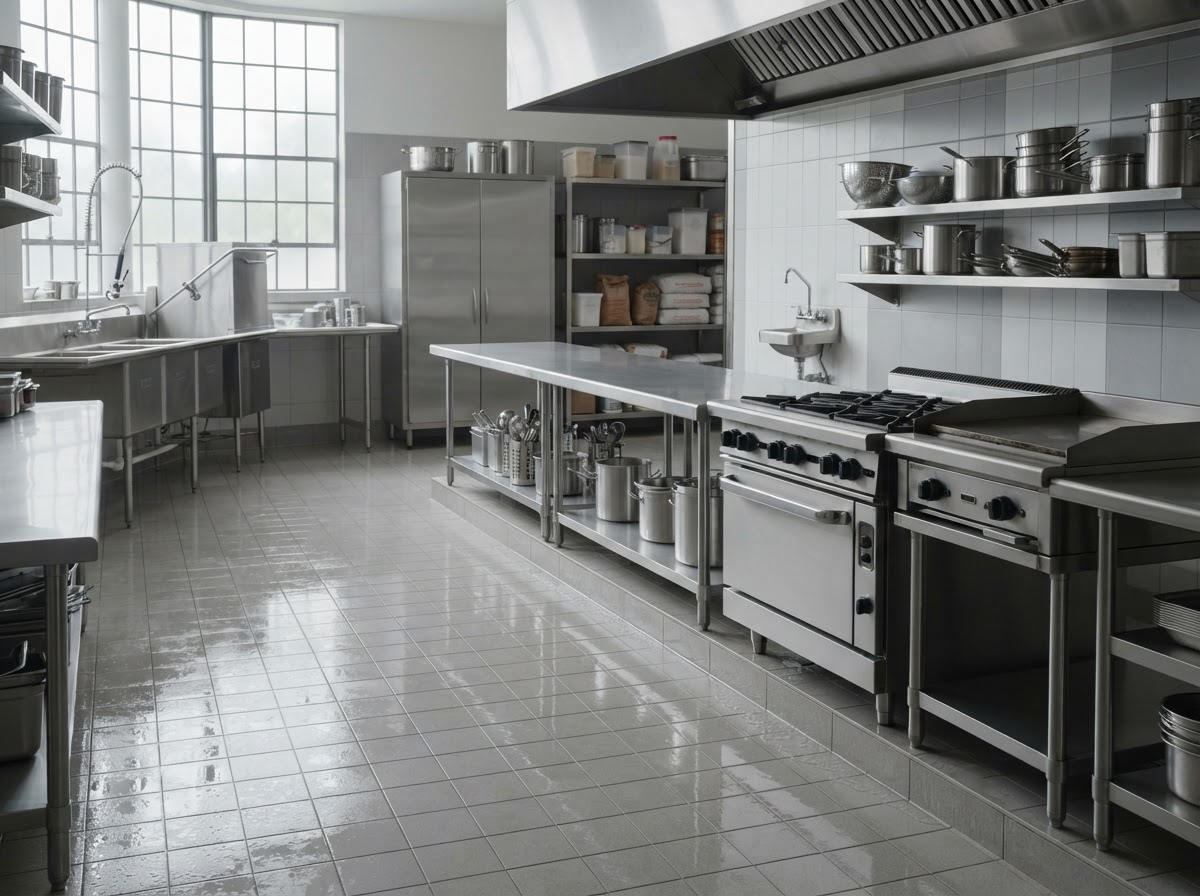
Wiregrass • Food-service property
Restaurant Water Damage Restoration in Dothan, AL
Water in a commercial kitchen, dish pit, dining room, restroom, or cooler-adjacent area raises a different set of questions than a residential spill. A practical assessment can help an owner or manager clarify the source, the affected zones, the condition of materials and equipment, and how the work might be sequenced with food-service operations — without implying a crew is dispatched immediately or that the restaurant can stay open. Submitting the form here is an assessment inquiry, not a confirmed dispatch, a health-department clearance, or a food-safety certification.
The problem
Why a restaurant water event is a different conversation
- Supply or drain line failure in a kitchen or bar
- Dishwashing or beverage equipment connection leaks
- Roof or building-envelope intrusion
- HVAC condensate or sprinkler discharge
- Outside flooding reaching ground-level seating
- Tile, grout, and cooler-adjacent finishes
- Dining furnishings and electrical equipment exposure
Process
From a restaurant water concern to a coordinated plan
A general sequence for a restaurant water-damage assessment. Whether each step applies depends on the source, the materials, the occupancy, and the qualified provider's scope — which must be verified before any service claim is published.
Authorized manager and safe access
The inquiry is reviewed with an authorized owner or manager, and access is arranged only where the area is safe to enter and the appropriate party has granted permission.Qualified plumber or equipment specialist addresses the source
Identifying and stopping a supply, drain, dish machine, or refrigeration source is a separate qualified-trade scope performed by an appropriate professional — not assumed to be included with the mitigation inquiry.Evaluate utility and food-service hazards
Where water is near outlets, panels, gas lines, or food-prep equipment, the area is avoided and an appropriate electrical, utility, or equipment professional is engaged before anyone proceeds.Identify water-affected zones
A qualified evaluation maps the affected zones — kitchen, dish area, dining room, restrooms, storage, and cooler-adjacent areas — including moisture that may not be visible at the surface.Extraction, materials review, and drying or referral
An appropriate plan for water removal, controlled drying, cleaning, and removal of unsalvageable materials is developed based on the findings; food-safety-adjacent work is referred to qualified specialists.Coordinate with facility operators and authorities as needed
Where health, fire, or building officials have jurisdiction, coordination runs through the authorized facility contact — not through this website. Reopening and food-safety questions are decided by the responsible officials.Document scope and separate repair coordination
Photos, readings, and written scopes organize the owner/insurer/vendor discussion, and finish and equipment repairs are coordinated as a separate scope from the mitigation — without promising coverage or a reopening date.
Materials & scope
Occupancy, inventory, and timing considerations
A restaurant's back-of-house, front-of-house, and storage areas each carry different salvage and access questions. No guarantee is offered that operations continue, that no food is lost, or that a reopening date is fixed.
- Kitchen vs. dining scheduling
- A wet dish area can close one part of the operation while the dining room stays open — or both may need to close depending on the hazard and the authorized decision, not a blanket promise.
- Staff traffic & patron areas
- Cordons, signage, and alternate routing protect staff and guests; where a hazard is present, immediate action may be required regardless of meal service.
- Perishable inventory & storage
- Cooler-adjacent or storage contact with water can affect perishable goods; disposal decisions follow health guidance, not a guarantee that contaminated food is recoverable.
- Equipment access
- Dish machines, beverage lines, refrigeration, and electrical equipment exposed to water may require qualified equipment specialists separate from the building-materials mitigation.
- Flooring, walls & materials
- Tile and grout transitions, porous finishes, cabinetry, and drop ceilings are assessed for moisture and condition separately from one another; surface drying does not prove the assembly is dry.
- Insurance & interruption
- Business-interruption and spoilage questions are separate from mitigation and depend on the policy, endorsements, and documentation. No automatic payout or reopening date is promised here.
Frequently asked questions
Next steps
Related restoration topics
Live pages with related guidance for Dothan-area property owners.
Describe the restaurant concern and request an assessment
Share the business and property location, the authorized contact role, the source if known, the kitchen, dining, or storage zones affected, any current occupancy or utility restrictions, and brief safe observations. The inquiry is reviewed; it is not confirmed dispatch, a food-safety certification, or a reopening date. Food-service specialist capacity must be verified before service is offered.