Wiregrass • Water Damage
Water Damage Restoration in Dothan, AL
Visible water is only one part of a possible moisture problem. A useful assessment can help clarify the source, the affected materials, any hidden moisture, and the next steps for your Dothan-area property — without promising a crew, a fixed arrival time, or a guaranteed outcome.
The problem
Signs, sources, and the difference between a clue and a conclusion
- Sudden supply-line or plumbing failures
- Appliance connections and hose leaks
- Roof and ceiling intrusion
- Stormwater entering at openings
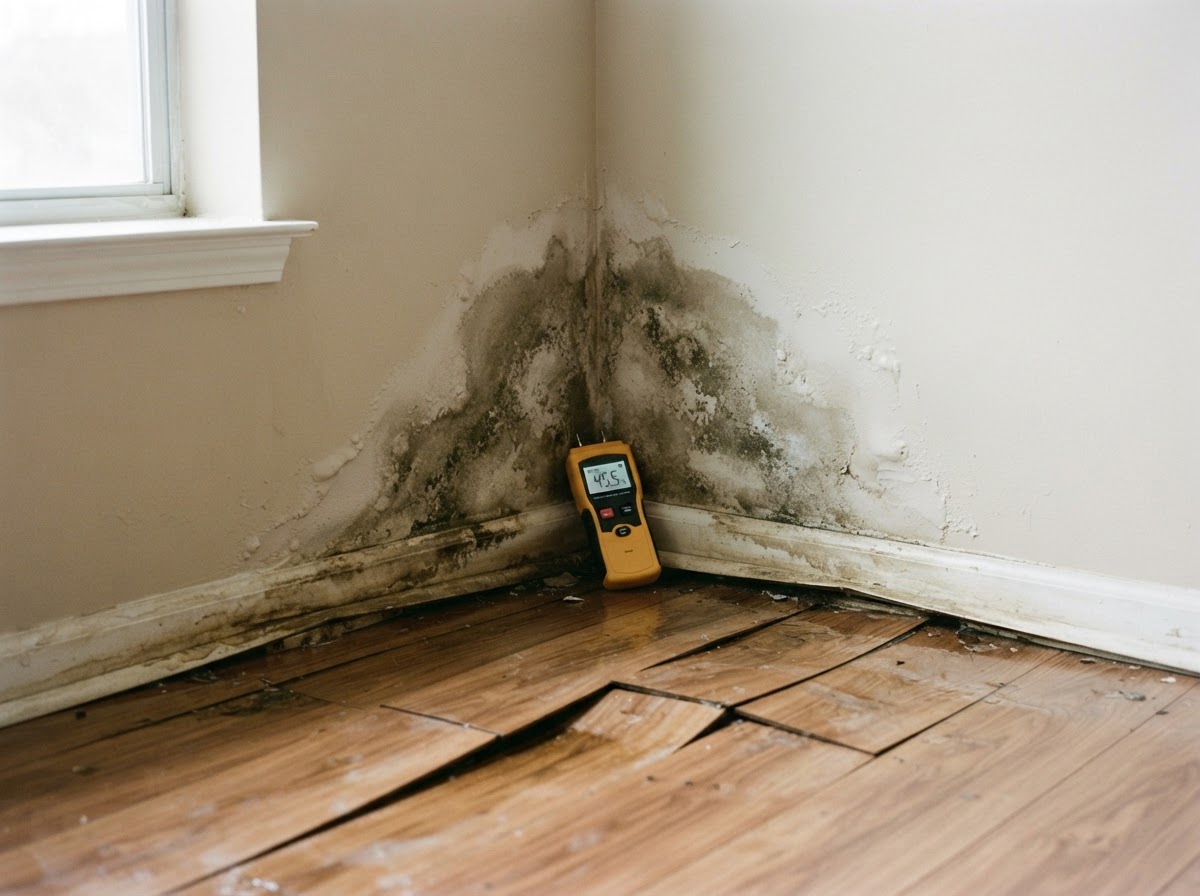
- Wet, buckling, or discolored flooring
- Discolored or soft drywall
- Musty or damp odors
- Swollen trim, baseboards, or cabinetry
- Changes in how materials look or feel
Process
From discovery to documented, dry conditions
A general sequence for a water damage concern. The actual order and which steps apply depend on the source, the materials, and the verified provider's scope.
Gather history and note hazards
Note when the water appeared, where it seems to be coming from, and whether anything electrical, structural, or contaminated is involved.Stop or isolate the source
If it can be done safely, the appropriate person isolates the source. Plumbing, roofing, and appliance repairs are separate from mitigation and may require a licensed trade.Assess visible and possibly concealed moisture
A qualified inspection looks beyond the surface — behind walls, under flooring, and into cavities — using moisture meters and thermal imaging where appropriate.Determine safe extraction and containment
Standing water and saturated materials are addressed with methods chosen for the water category, access, and material type.Review materials for drying versus removal
Some materials can be dried and monitored; others that are saturated, contaminated, or structurally compromised may need removal.Use controlled drying and monitoring
Where qualified, equipment and moisture readings are used until target conditions are met. There is no universal drying period.Document outcomes and coordinate repairs
Reconstruction, finish work, and regulated trades are coordinated separately from mitigation and are not automatically included.
Materials & scope
What can be affected, and why decisions vary
Material condition, water category, accessibility, and preexisting issues all change what is reasonable — there is no single answer for every property.
- Carpet & padding
- Padding often cannot be salvaged once saturated; carpet may be dried depending on water category and contamination.
- Hard flooring
- Hardwood may cup or warp; engineered and laminate products can delaminate and may require replacement.
- Cabinets
- Water can wick into cabinet backs and toe kicks where it is hard to reach or dry.
- Drywall
- Saturation, wicking lines, and contamination determine whether a section is dried or cut and replaced.
- Insulation
- Wet insulation loses effectiveness and may hold moisture against framing; it is often removed.
- Ceilings & cavities
- Water can travel along framing and collect far from the visible source.
Frequently asked questions
Next steps
Related restoration topics
Live pages with related guidance for Dothan-area property owners.
Describe the damage and request an assessment
Share what happened, the property location, when it was discovered, and whether the source has stopped. The inquiry is reviewed — it is not a dispatch, booking, quote, or service acceptance.