Wiregrass • Flood
Flood Damage Cleanup in Dothan, AL
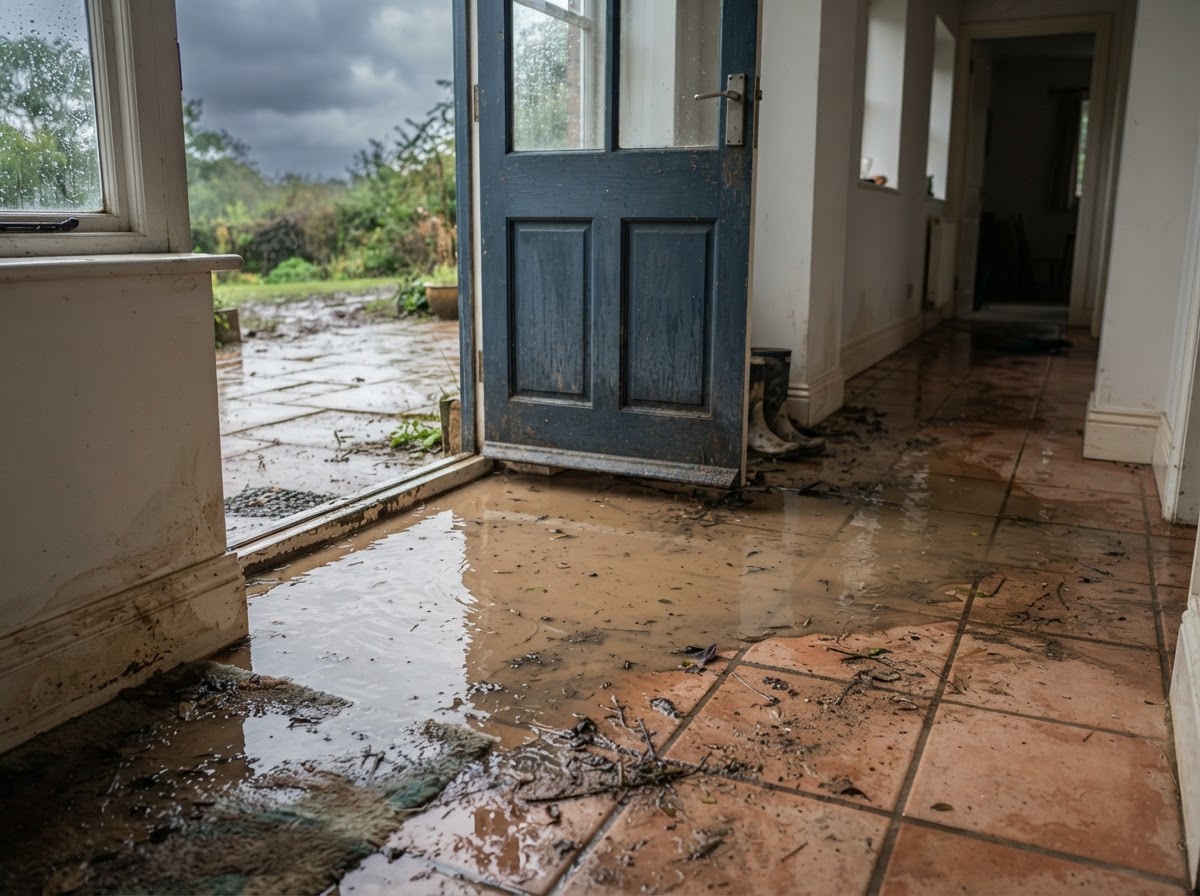
Flood damage can involve more than the water you can see — affected materials, potential contaminants, and access restrictions all change the cleanup. Safety comes first: do not enter floodwater or an energized building. An assessment inquiry helps organize a plan once access is safe; it is not a flood-response guarantee.
The problem
How floodwater differs from a clean plumbing leak
- Heavy rainfall and overwhelmed drainage
- Water entering at doors, windows, or openings
- Runoff and low-lying collection
- Storm-related intrusion
- Indoor overflows that spread widely
- Porous finishes and subfloor exposure
- Crawl spaces and storage rooms
Process
A safety-first flood assessment sequence
Do not pump contaminated water or enter an energized building. These steps assume safe access has been confirmed.
Wait for official clearance and safe access
Where required, wait for authorities to confirm it is safe to enter. Do not enter floodwater or a building with active electrical or structural hazards.Document visible conditions from a safe position
Photograph the water line, affected rooms, and damaged materials only if it is safe to do so.Identify water source and material exposure
Note where the water entered, how high it reached, and which materials and contents were exposed.Evaluate contamination and salvage feasibility
Porous materials, insulation, and contents exposed to contaminated water may not be salvageable. A qualified assessment informs those decisions.Plan containment, cleaning, and drying
Appropriate containment, cleaning, and controlled drying are planned by qualified providers based on the conditions found.Coordinate reconstruction and utilities separately
Electrical, structural, and finish reconstruction are separate scopes coordinated with the appropriate trades and utility providers.
Materials & scope
Property, materials, and the insurance question
Contamination, duration, and structural condition can affect salvage. Flood insurance and homeowners insurance are different types of coverage.
- Porous finishes
- Drywall, insulation, and fabrics exposed to floodwater often cannot be fully cleaned and may be removed.
- Subfloor
- Water can penetrate finished flooring and saturate the subfloor beneath.
- Crawl spaces
- Standing water beneath the home can affect framing, ductwork, and vapor barriers.
- Detached structures
- Sheds, garages, and outbuildings may have separate exposure and access considerations.
- Business premises
- Commercial spaces add inventory, occupancy, and continuity concerns to the cleanup.
- Coverage type
- Flood insurance and homeowners insurance are distinct. Policy terms vary; this site does not interpret your coverage or promise payment.
Frequently asked questions
Next steps
Related restoration topics
Live pages with related guidance for Dothan-area property owners.
Request a flood-damage assessment
Tell us the general source, where water entered, which rooms are affected, the property location, and whether emergency authorities have cleared access. The inquiry is reviewed — it is not a confirmed response or service acceptance.