Wiregrass • Flooring
Water-Damaged Flooring Removal in Dothan, AL
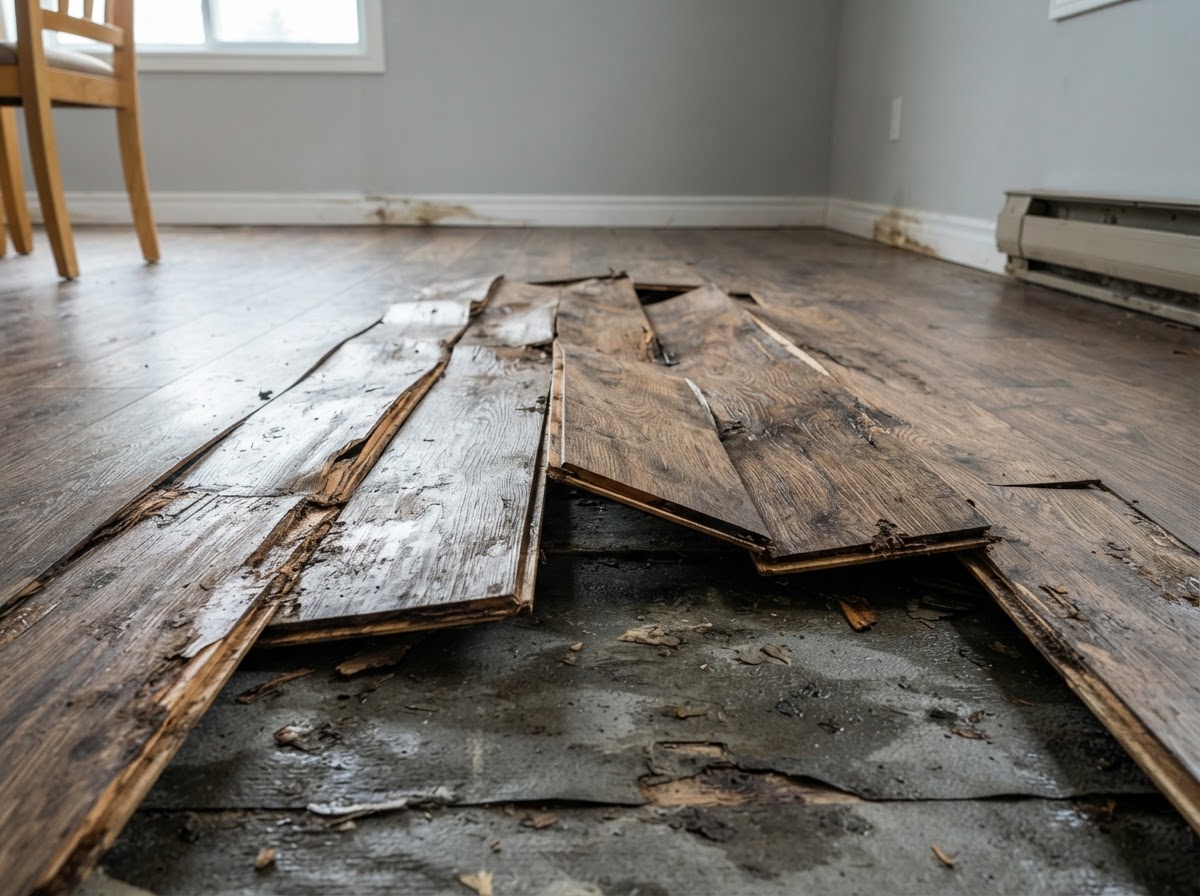
Lifting, buckling, swelling, softness, or moisture that has crept beneath a floor finish all raise the same question after a leak or flood: does the flooring need to come out? The answer depends on the water source, the material, how much moisture is hidden, and the condition of what is beneath — not on an automatic tear-out recommendation. This assessment is an inquiry, not a confirmed removal plan.
The problem
Why a floor that looks fine can still be wet underneath
- Laminate swelling and edge peaking
- Engineered and solid wood movement
- Vinyl or tile hiding a damp substrate
- Carpet and pad saturation
- Delamination and damaged adhesives
- Wet baseboards and transitions
- Moisture trapped under intact finishes
Process
From assessment to a removal decision
A general sequence for evaluating and, where warranted, removing water-damaged flooring. Removal is not automatic after every spill, and the steps depend on the material and conditions found.
Confirm source and hazards
The water source is confirmed stopped, and the area is checked for electrical, structural, or contamination hazards before anyone proceeds.Assess flooring type and underlayment or subfloor
The material, construction, and what lies beneath it determine how moisture behaves and whether drying, selective removal, or broader removal is appropriate.Take appropriate moisture readings and evaluate contamination
Readings below the surface locate hidden moisture, and the water category informs whether materials can be dried or should be removed for safety.Decide between drying in place, selective removal, or qualified removal
Some materials and areas can be dried; others require removing only the affected section; saturated or contaminated materials may need broader qualified removal.Protect occupants and contents and manage debris safely
Where removal is needed, occupants, belongings, dust, and debris are managed safely — no hazardous demolition is described or encouraged here.Dry and verify the subfloor as appropriate
Before any new flooring goes back down, the subfloor is dried and verified so moisture is not sealed beneath a new surface.Coordinate qualified flooring replacement or reinstallation
New flooring installation or reinstallation is a separate scope performed after conditions support it, by qualified providers.
Materials & scope
Property factors that change the decision
Construction, transitions, and what is built over the flooring all change what removal involves. Old adhesives and coatings can introduce hazards that require suitable professional evaluation.
- Slab versus raised floors
- Concrete slabs release moisture slowly; raised floors with a subfloor and crawlspace can hold moisture in multiple layers that each require inspection.
- Room transitions
- Moisture travels under transitions between rooms, so the affected area can extend beyond the room where the water was first seen.
- Cabinets over finishes
- Flooring running under cabinets complicates removal, and the cabinet and the floor beneath it both require assessment rather than assumption.
- Glue-down layers
- Adhesive layers can hold moisture or fail after water exposure, and some older adhesives require evaluation for hazardous materials before removal.
- Stair and multifamily situations
- Stairs and shared walls in multifamily buildings can spread moisture between units and complicate access and coordination.
- Cost and timeline drivers
- Final scope and cost depend on material, area, the moisture path, contamination, and access — no fixed per-square-foot price is given here.
Frequently asked questions
Next steps
Related restoration topics
Live pages with related guidance for Dothan-area property owners.
Describe the affected flooring and request an assessment
Share the flooring type, the room or area affected, the suspected source, when it was discovered, the visible changes, and the property location. The inquiry is reviewed — it is not a confirmed removal plan or dispatch.