Wiregrass • Carpet & Pad
Carpet Drying and Pad Replacement in Dothan, AL
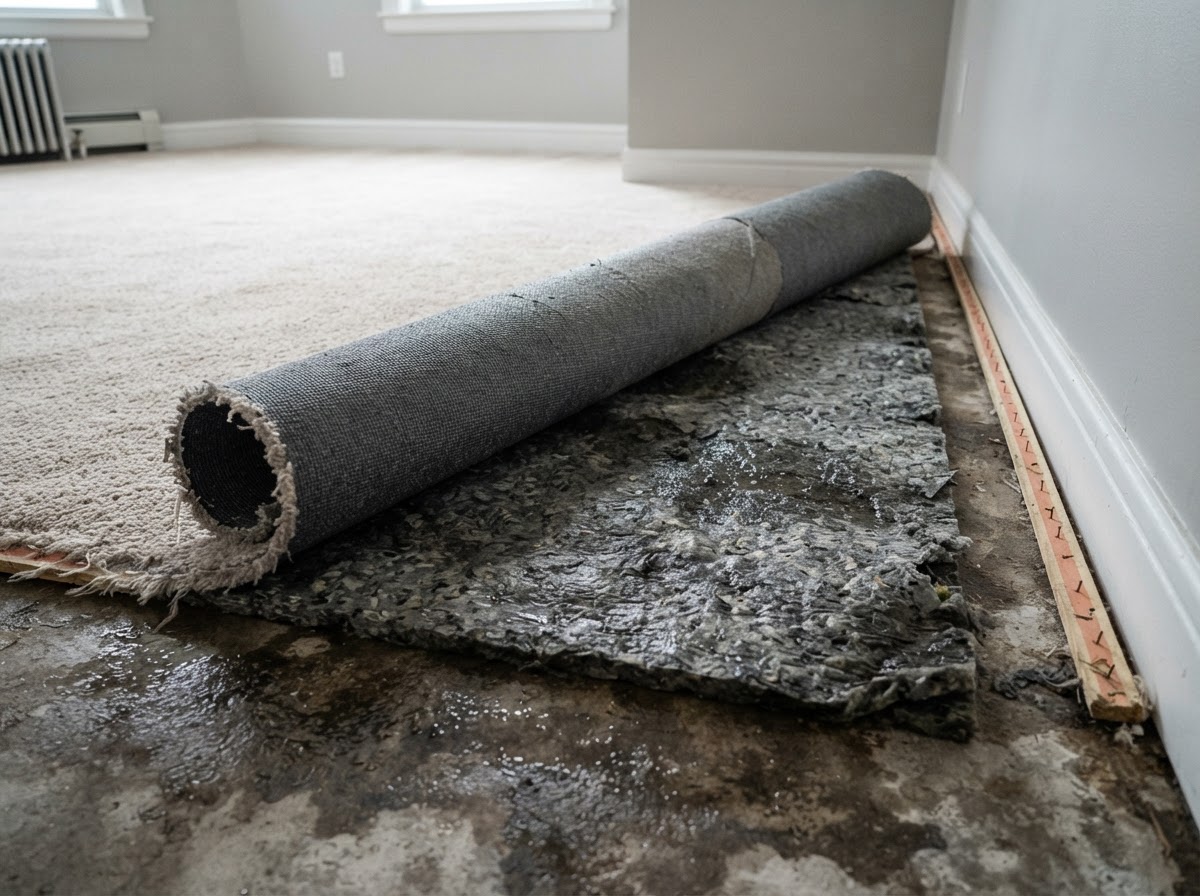
Soaked carpet after a supply leak, an appliance incident, or water intrusion is a common situation, and the surface water can be gone while the padding beneath remains wet. A qualified assessment helps determine the water source and conditions and whether the carpet can be dried or the pad should be replaced — not an unconditional promise that every carpet can be saved. Contaminated water changes the decision entirely.
The problem
What a wet carpet hides underneath
- Damp pile that feels wet underfoot
- Squishing or pooling sensation when walked on
- Odors from trapped moisture
- Discoloration or staining
- Wet edge strips and tack strip
- Saturated padding beneath a drier surface
- Moisture reaching the subfloor
Process
From a wet carpet to a dry, evaluated floor
A sequence for assessing and, where appropriate, drying carpet and replacing pad. Contaminated water is handled very differently, and no sewage or floodwater carpet DIY is described or encouraged.
Safety and stop the source
The area is checked for electrical or contamination hazards and the water source is confirmed stopped before anyone proceeds.Qualified evaluation of contamination and material condition
The water category and the carpet and pad condition are evaluated, because contamination changes whether materials can be dried or must be discarded.Determine if clean-source wet carpet can be extracted and dried
Carpet exposed to clean water may sometimes be extracted and dried in place, depending on the material, exposure, and whether the pad can be removed.Determine whether pad must be removed
Padding is highly absorbent and is commonly removed and replaced rather than dried, because it holds water and slows drying of the carpet and subfloor.Discard contaminated material through qualified processes
Carpet or pad exposed to sewage or outside floodwater is generally not reused and is handled through appropriate qualified disposal rather than DIY cleaning.Assess and dry the subfloor and adjacent baseboards
Beneath the pad, the subfloor and nearby baseboards are inspected and dried so moisture is not sealed under a reinstalled carpet.Monitor conditions and plan replacement separately
Conditions are monitored and new pad and reinstallation, where appropriate, are planned as a separate scope after the subfloor is dry.
Materials & scope
Property and project factors for carpet
Carpet type, installation method, and the room all change the work. Rapid surface drying alone does not prove the pad or substrate is ready.
- Residential rooms & stairs
- Bedrooms, hallways, and stairs each present different access and drying considerations, and stairs can hold moisture in the edges and tack strips.
- Occupied rentals & commercial carpet
- Rental properties require coordination with tenants and management, and commercial carpet systems add traffic and continuity concerns to the work.
- Carpet tile versus broadloom
- Broadloom is typically stretched over pad; carpet tile is glued down and may be selectively replaced, and the two are handled differently after water.
- Glued versus stretched carpet
- Glue-down carpet may release adhesive when wet and requires subfloor evaluation; stretched carpet over pad is disassembled and dried in layers.
- Padding types
- Different pad materials hold water and dry at different rates, and most are removed rather than dried because they compact and retain moisture.
- Transitions & furniture
- Moisture travels under transitions between rooms, and furniture must be protected or moved, which extends the affected area beyond the visible spill.
Frequently asked questions
Next steps
Related restoration topics
Live pages with related guidance for Dothan-area property owners.
Describe the carpet situation and request an assessment
Share the source, which rooms are affected, the carpet and pad condition, when it was discovered, whether the water was from outside or plumbing, and the property location. The inquiry is reviewed — it is not a confirmed salvage or replacement plan.