Wiregrass • Cost factors
How Much Does Water Damage Restoration Cost in Dothan, AL?
The honest answer about water damage restoration cost in Dothan is that no single dollar figure applies before anyone has seen the property. A reliable estimate depends on the water source and its contamination, the area and materials affected, how long they were wet, how accessible the wet areas are, and what drying, removal, cleaning, and reconstruction the situation actually requires. A surface puddle in one room is a very different scope than water that traveled through wall cavities, beneath flooring, or across multiple rooms. This page lays out the factors that change a restoration scope so a Dothan property owner can gather the right information and ask the right questions — without publishing a fabricated price list or promising a quote before the conditions are known.
The problem
What restoration cost actually depends on
- Water source and contamination category
- How long materials stayed wet
- Area affected and how far the water spread
- Materials involved (drywall, insulation, flooring, cabinets)
- Accessibility of wet cavities and subfloor
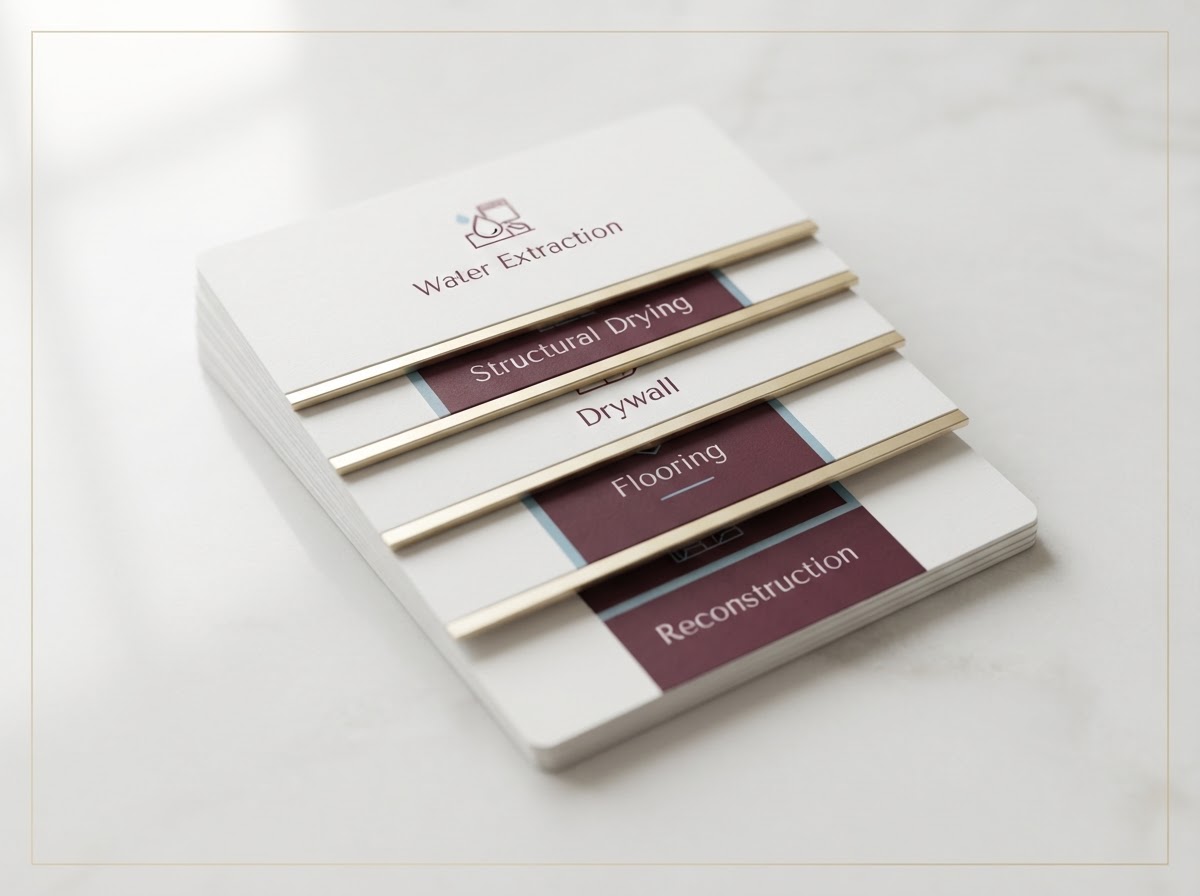
- Extraction, controlled drying, and monitoring
- Removal versus drying of saturated materials
- Separate reconstruction and source-repair trades
Process
How a restoration estimate is developed
A general sequence a qualified provider may follow to turn a Dothan property's conditions into a written estimate. Whether each step applies depends on the actual damage and the provider's verified scope.
Source identification and safe access
Before any cost can be quoted, the source is identified and, where safe and appropriate, stopped or isolated by the right qualified trade. A wet floor with an active leak carries a different scope than one where the source has already been controlled.On-site observations and measurements
A qualified provider inspects the affected rooms and uses appropriate instruments to measure moisture in materials and cavities, because the visible water is usually only part of the affected area.Written description of affected areas
The estimate documents which rooms, walls, floors, and cavities are affected and to what extent, rather than quoting a single room rate.Material condition assessment
Drywall, insulation, flooring, trim, and cabinetry are evaluated for whether they can be dried, need removal, or require replacement — each carries a different scope and cost path.Mitigation versus rebuilding lines
Extraction and drying are a different scope (and often a different invoice) from demolition, finish repair, and reconstruction. The estimate separates the mitigation line from the rebuild line so the owner understands what each covers.Concealed conditions and uncertainty
Wet materials can hide moisture behind walls or under floors. Where concealed damage is found during work, the scope may need to be revised — a reason a reliable estimate is conditioned on what is actually found.Possible revised scopes
As drying progresses and hidden conditions emerge, a written estimate may be updated. A change order is normal for complex losses and does not mean the original estimate was wrong.Documentation for the owner and insurer
Photos, readings, and a written scope help the property owner, insurer, and contractor coordinate — without the website promising what the insurer will pay or what the final total will be.
Materials & scope
Insurance and customer decisions
Homeowners, commercial, and flood coverage each handle water damage differently, and the insurer's determination is separate from the contractor's scope. No payment, approval, or deductible-only obligation is promised here.
- Source & contamination
- A clean plumbing release, a sewage backup, and outside floodwater each fall under different coverage rules and mitigation requirements. The estimate reflects the actual category, not a flat per-room rate.
- Duration of exposure
- How long materials stayed wet changes both the scope and the cost: a leak stopped within hours differs from one that soaked framing for days. Time also affects which materials can be saved versus removed.
- Materials & accessibility
- Drying a carpet over a concrete slab differs from drying engineered wood over a wood subfloor, and a tight crawl space differs from an open living room. Access and material type change the equipment, labor, and time required.
- Mitigation vs. reconstruction
- Extraction, drying, and monitoring are priced separately from demolition, drywall replacement, finish carpentry, and floor replacement. Bundling them obscures what is actually being charged for each phase.
- Concealed & secondary damage
- Hidden moisture behind walls or under floors can change the scope once discovered; a reliable estimate is conditional on what the property actually shows, not a pre-set package price.
- Coverage type & documentation
- Whether a loss is covered, and by how much, depends on the policy, endorsements, exclusions, and the claim file. This page does not interpret your coverage, promise payment, or act as a public adjuster; mitigation records support the insurer discussion but do not decide the claim.
Frequently asked questions
Next steps
Related restoration topics
Live pages with related guidance for Dothan-area property owners.
Describe the damage and request an assessment
Share the property location, the issue and source if known, the affected areas, the material types, how long the problem has been present, and any safety restrictions. The inquiry is reviewed; it is not a quote, a price guarantee, or an insurance approval. Reliable pricing requires an on-site assessment by a qualified provider, and any quoted scope would reflect the actual conditions found — not a figure published on a website.