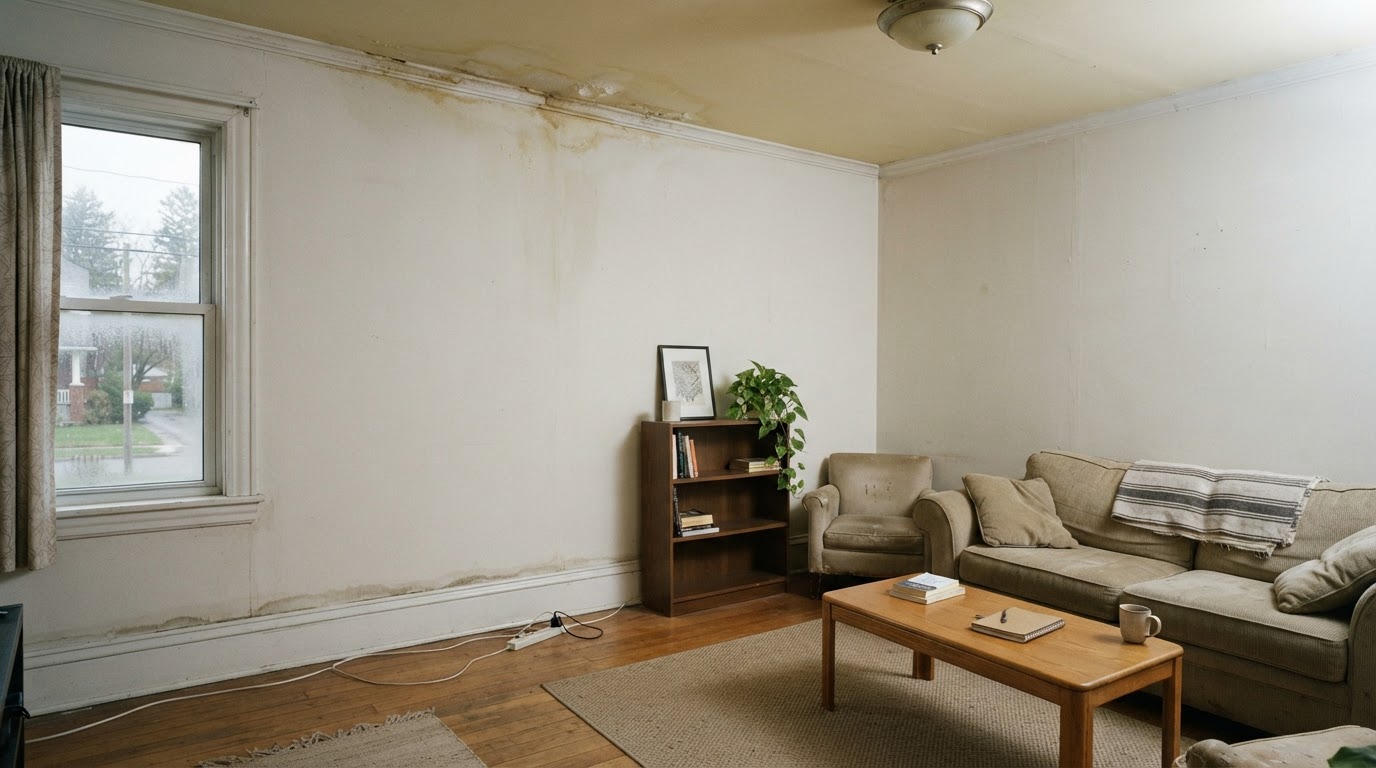
Wiregrass • Rental property
Water Damage in Rental Homes: Practical Next Steps in Dothan
Water damage in a rental home raises practical questions about safety, communication, and who authorizes what — and the responsible first steps are the same regardless of who pays: prioritize occupant safety, document visible conditions without exposure to hazards, communicate through the lease or property-management channel, and arrange qualified source and restoration assessment when properly authorized. Questions about who pays, who can authorize work, property access, rent adjustments, temporary accommodations, or lease termination depend on the applicable agreement, the actual facts, and Alabama law. There is no automatic outcome, and this page does not provide legal advice or state a statutory remedy.
The problem
Common rental-property water damage situations
- Plumbing leaks from pipes, fixtures, or other building components
- Water-heater or appliance leaks that spread beyond the visible room
- Roof and ceiling leaks affecting both the building and occupants' belongings
- Air-conditioning or condensate issues requiring qualified source repair
- Upper-floor or neighboring-unit leaks involving separate property areas and parties
- Outside water intrusion with possible contamination
- Damage to carpet, drywall, flooring, cabinets, or belongings as separate evaluations
Process
Documentation and communication workflow
A practical, neutral process that any authorized contact can follow. It does not create statutory deadlines or legal remedies; it organizes the information the parties need to coordinate safely.
Avoid dangerous conditions
Stay out of water near electrical outlets, unstable ceilings or floors, suspected sewage, or compromised structures. Safety comes before documentation; do not enter a hazardous area to take photos.Note visible symptoms and timing
Record what is visible from a safe location, when it was first noticed, and whether the source appears active. Photos taken only from a safe vantage point help communicate the concern without exposing anyone to risk.Communicate through the authorized channel
Report through the known authorized contact or property-management channel rather than acting unilaterally. Who must be notified and by when can depend on the lease and applicable law; this page does not invent a statutory deadline.Record the issue and responses
Keep a written record of what was reported, when, and the responses received. This helps the owner, manager, insurer, and any trades coordinate without relying on memory.Clarify whether the source is active
Where safe to observe, note whether the water source is still running or has stopped. An active leak may need urgent source-repair attention from the appropriate qualified trade.Coordinate authorized professional evaluation
Arrange qualified source and restoration assessment when properly authorized. Entry, repairs, and mitigation usually require the owner's or manager's permission; do not assume a tenant may authorize unrestricted work or discard another person's possessions.Obtain written scope and documentation
A written scope of what is affected and what work is proposed helps the parties, the insurer, and any trades coordinate. Keep records of photos, readings, and communications.
Materials & scope
Responsibility, insurance, and habitability questions
Lease terms, cause, and coverage shape these answers — not a website opinion. This section offers neutral context and avoids unverified Alabama-specific legal remedies.
- Lease and management arrangements
- Actual lease terms and management authority may influence how work is reported, who authorizes it, and what remedies exist. No automatic right to withhold rent, terminate the lease, or enter without permission is stated here; those depend on the agreement and current law.
- Cause and scope
- Responsibility cannot be established simply by where water appears. The cause, the scope of damage, and the parties' actions all matter, and they are factual questions for the owner, manager, insurer, and where needed a qualified legal professional.
- Renters insurance vs. building insurance
- These may cover different interests. A tenant's renters policy and the owner's building policy can respond differently to the same event, and coverage depends on policy language, cause, exclusions, and claim circumstances. No automatic coverage, payment, or deductible outcome is promised.
- Personal belongings
- Damage to a tenant's personal contents can be a different question from damage to floors, walls, or building systems. Belongings may involve the tenant's renters policy, while building damage may involve the owner's coverage; the two are not the same claim.
- Occupancy and temporary arrangements
- Whether a unit is habitable, whether temporary accommodation is warranted, and what rights apply are safety and legal questions that require qualified review. This page does not promise relocation, rent abatement, or lease termination; it directs those questions to the controlling agreement and qualified help.
Frequently asked questions
Next steps
Related restoration topics
Live pages with related guidance for Dothan-area property owners.
Request a rental-property assessment
If you are an authorized property contact, share the rental property address or general location, the type of issue, the general affected area, your role (tenant, owner, or authorized manager), the known water-source status, and any access restrictions. Do not submit lease documents, insurance account details, tenant identity records, or payment credentials through this form. The inquiry is reviewed; it is not a legal opinion, a coverage determination, or a confirmation of dispatch.