Wiregrass • Roof-leak moisture
Mold After a Roof Leak: What to Check in Dothan
A roof leak can wet concealed materials and create conditions that may warrant evaluation, but mold cannot be confirmed solely from a stain, an odor, or an assumed exposure time. A sound plan does two things: it addresses the roof as the source of the water, and it evaluates the interior materials that got wet — ceiling drywall, insulation, framing, and walls — on their own terms. If a ceiling is sagging, water is near electrical fixtures, or attic or roof access is unsafe, stay back and involve the appropriate qualified professional rather than climbing onto the roof or into a compromised attic.
The problem
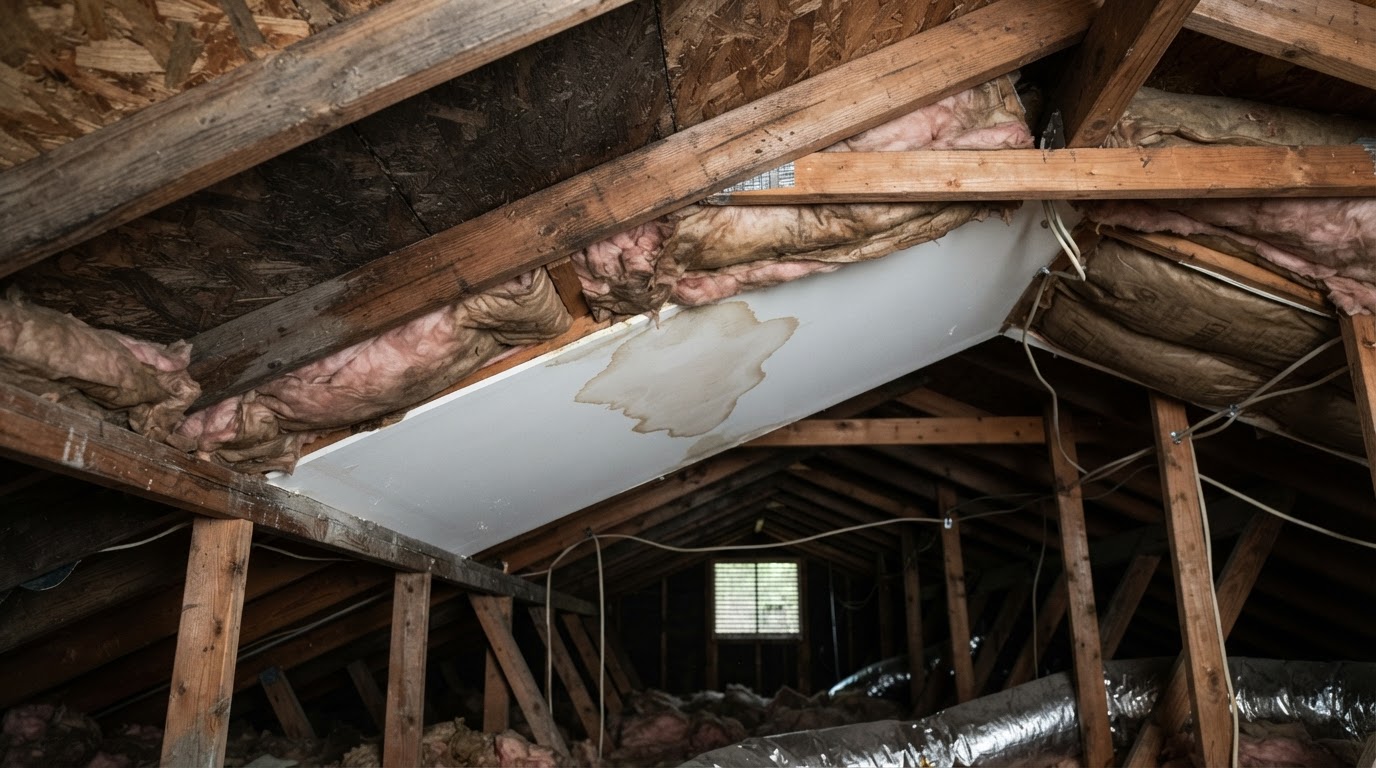
What a roof leak may affect inside the home
- Ceilings and drywall: past or current moisture, possible hidden extent
- Attic insulation retaining moisture or concealing affected framing
- Wood framing and structural components needing moisture/condition evaluation
- Wall cavities where water traveled away from its entry point
- Recurring leaks that complicate evaluation over time
- Odor or discoloration as clues, not as mold or structural diagnoses
Process
Assessment and relevant specialist roles
Roofing, interior moisture assessment, mold inspection/sampling, and remediation can each be a distinct scope, and they may not be performed by the same person or company. Which steps apply depends on the actual conditions and the providers' verified capabilities.
Qualified roofing professional (source)
A licensed or qualified roofer investigates and addresses the roof entry source within their authorized scope. Interior restoration does not replace roof repair, and a roof fix alone does not dry the materials below it.Moisture or restoration assessment (materials)
A restoration or moisture-assessment professional evaluates affected interior materials and determines whether mitigation, drying, or material removal is appropriate based on actual readings — not on a default demolition decision.Mold inspection or sampling (where warranted)
A qualified mold-inspection or sampling specialist may be useful when a specific question warrants testing. Not every project needs laboratory sampling, and thermal images reveal temperature differences, not confirmed mold.Remediation (if supported by evaluation)
A remediation provider performs appropriate removal or cleaning only when supported by actual evaluation and their verified capability. Testing and remediation are separate functions, and independent evaluation may be appropriate for the question being asked.Document findings, scope, and remaining uncertainty
A written record of what was observed, what was done, and what remains unresolved helps the owner coordinate roofing, restoration, and any follow-up evaluation without confusing the scopes.
Materials & scope
Treatment decisions, occupied spaces, and limitations
Repainting a water stain before the roof source is corrected and the materials are evaluated is often premature. The plan that follows depends on the source, the materials, access, and what qualified evaluation actually finds — not on a one-size approach.
- Source repair first
- A repaired roof addresses where the water came in; it does not by itself dry the ceiling, insulation, or framing. Without source correction, any drying or material work may be undone by the next rain, so the roof source and the interior materials are handled as related but separate scopes.
- Remaining moisture
- Insulation can hold moisture after the ceiling surface looks dry, and framing can stay damp inside a cavity. Drying decisions are based on actual measurements, not on whether the stain has faded — and a dry-looking surface does not prove the cavity above is dry.
- Insulation and drywall condition
- Whether insulation can stay, needs drying, or requires removal depends on its type, how long it was wet, and possible contamination. Not every wet ceiling needs demolition; the decision is condition-specific and is not assumed here.
- Access to concealed materials
- Some conditions require limited, authorized access to attic or wall cavities to evaluate. Do not open ceilings, walls, or attic spaces without owner consent and appropriate authorization; unsafe attic or roof access should be avoided.
- Separating work areas from occupied spaces
- Where remediation or material work is performed, the plan may need to separate the work area from occupied rooms. How that is handled depends on the conditions, the materials, and the provider's scope — not on a guaranteed 'stay in place' outcome.
- Health questions are separate
- Personal health concerns are for a qualified healthcare professional, not a restoration lead form. This page does not diagnose illness from odor or appearance, promise a mold-free outcome, or declare a home medically safe after surface cleaning.
Frequently asked questions
Next steps
Related restoration topics
Live pages with related guidance for Dothan-area property owners.
Describe the roof-leak and moisture concern
Share the approximate leak timeline, the known or suspected water entry point, any visible ceiling or wall changes, attic conditions observed only from a safe vantage point, whether roofing work has already occurred, the affected rooms, and the property location. Do not climb onto the roof or into a compromised attic to gather details, and do not submit medical history or mold-species guesses. The inquiry is reviewed; it is not a dispatch or a guarantee of service.