Wiregrass • Roof Intrusion
Roof Leak Water Damage in Dothan, AL
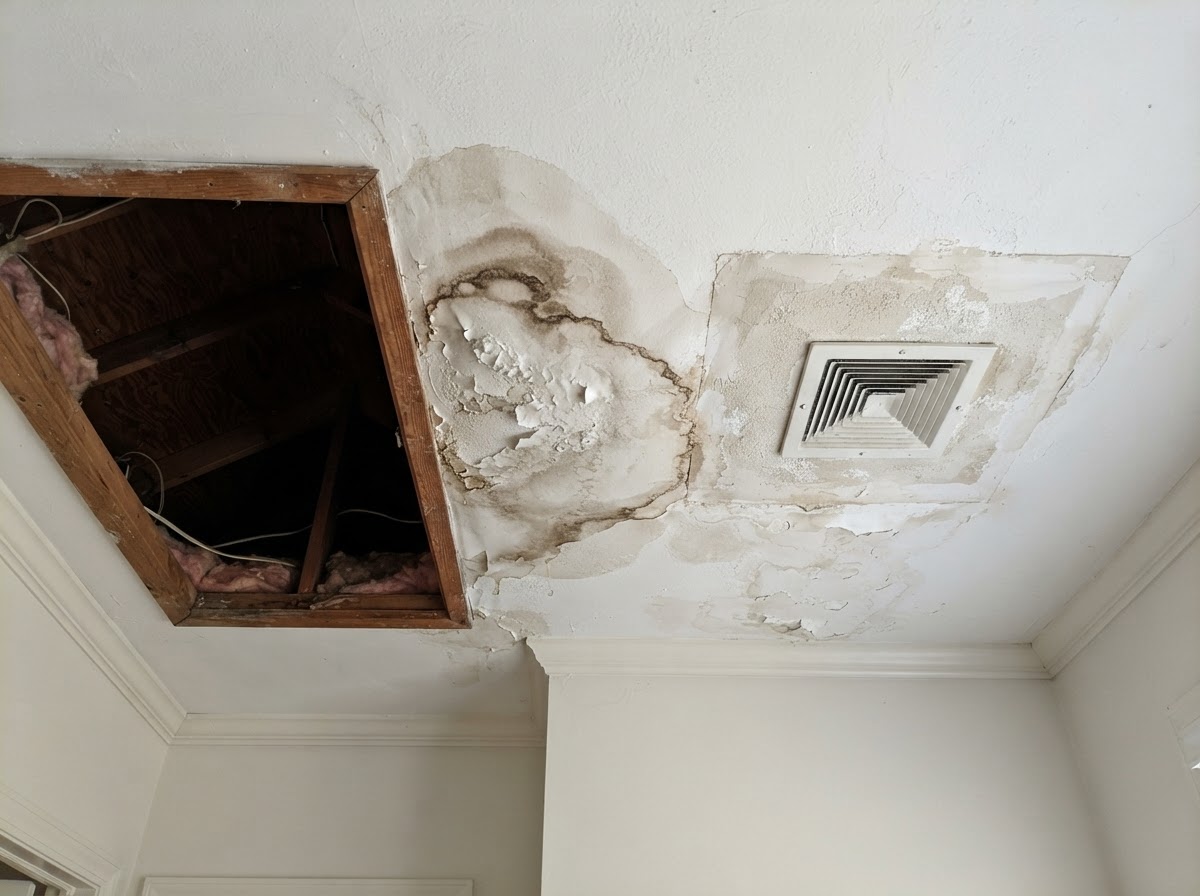
Ceiling stains, attic moisture, or dripping that appears after rain raise a practical question: what may be wet beyond the visible mark? Roof-related water intrusion can travel along framing before it shows inside, so the stain and the entry point are not always in the same place. A restoration assessment clarifies the affected materials and next steps. Roof repair is a separate scope, and this inquiry is not a promise of a roofer, an emergency tarp, or a same-day visit.
The problem
How roof water gets in, and why the stain is not the whole story
- Damaged or lifted shingles
- Failed flashing at penetrations or valleys
- Roof vents, skylights, and pipe boots
- Cracked or aged sealants
- Gutter or drainage overflow
- Wind-driven rain forced under otherwise sound components
- Water tracking along framing before appearing at a ceiling
Process
From a suspected roof leak to a documented, dry interior
A general sequence for roof-related interior water damage. The actual order depends on whether the source is still active, the materials involved, and the verified provider's scope.
Prioritize personal safety
Avoid standing beneath sagging or bulging ceilings, and do not touch wet electrical fixtures. If a ceiling appears unstable or water is near wiring, keep clear and have the area evaluated before anyone proceeds.Coordinate qualified roof or source assessment
Identifying and repairing the roof entry point is a roofing scope performed by a licensed contractor. Restoration does not include roof diagnosis or repair.Consider temporary protection if available
Where a qualified provider can safely apply temporary protection to limit further entry, that may be coordinated — but only if verified and appropriate, not as a guaranteed service.Document visible moisture
Stains, drips, damp insulation, and affected rooms are recorded from a safe position. Photos and notes help organize both the assessment and any insurer conversation.Evaluate attic, insulation, ceiling, and wall paths
Moisture can travel along framing and collect in cavities, so the inspection looks beyond the visible stain into the materials that may be wet behind the surface.Plan drying, removal, or cleaning
Based on findings, controlled drying, removal of unsalvageable materials, or cleaning is planned by a qualified provider. Methods depend on the materials and how much moisture is hidden.Arrange separate roof and finish repairs
Roof repair, board-up or tarping, and interior finish work are coordinated as separate scopes by the appropriate qualified trades. They are not automatically included with a water-damage inquiry.
Materials & scope
Materials and the decisions that follow a roof leak
Moisture travel, repeated leaks, and continuing rain all complicate drying. The scope depends on what is actually wet and for how long.
- Insulation
- Wet insulation loses effectiveness and can hold moisture against framing; it is often removed rather than dried, depending on type and contamination.
- Damp drywall
- Ceiling and wall drywall can wick water upward from the leak site; saturated or softened sections may need to be opened or cut and replaced.
- Attic framing
- Wood framing can stay damp after the rain stops, which can affect drying plans and material decisions if moisture remains.
- Ceiling paint & staining
- Stains and peeling paint may remain after the material is dry; cosmetic repair is a separate finish scope from mitigation.
- Interior trim & ventilation
- Trim, vent boots, and finished surfaces around the leak path can be affected and may need separate attention.
- Occupied spaces
- Furniture, belongings, and daily use of the room affect access, contents handling, and how work is scheduled.
Frequently asked questions
Next steps
Related restoration topics
Live pages with related guidance for Dothan-area property owners.
Describe the roof-related damage and request an assessment
Include where the stain or drip appears, when it shows up (such as during or after rain), any known roof inspection, the affected rooms, and any access or safety concerns. The inquiry is reviewed — it is not a dispatch, a roofer, or a confirmed arrival time.