Wiregrass • HVAC Condensate
AC Drain Line Leak Damage in Dothan, AL
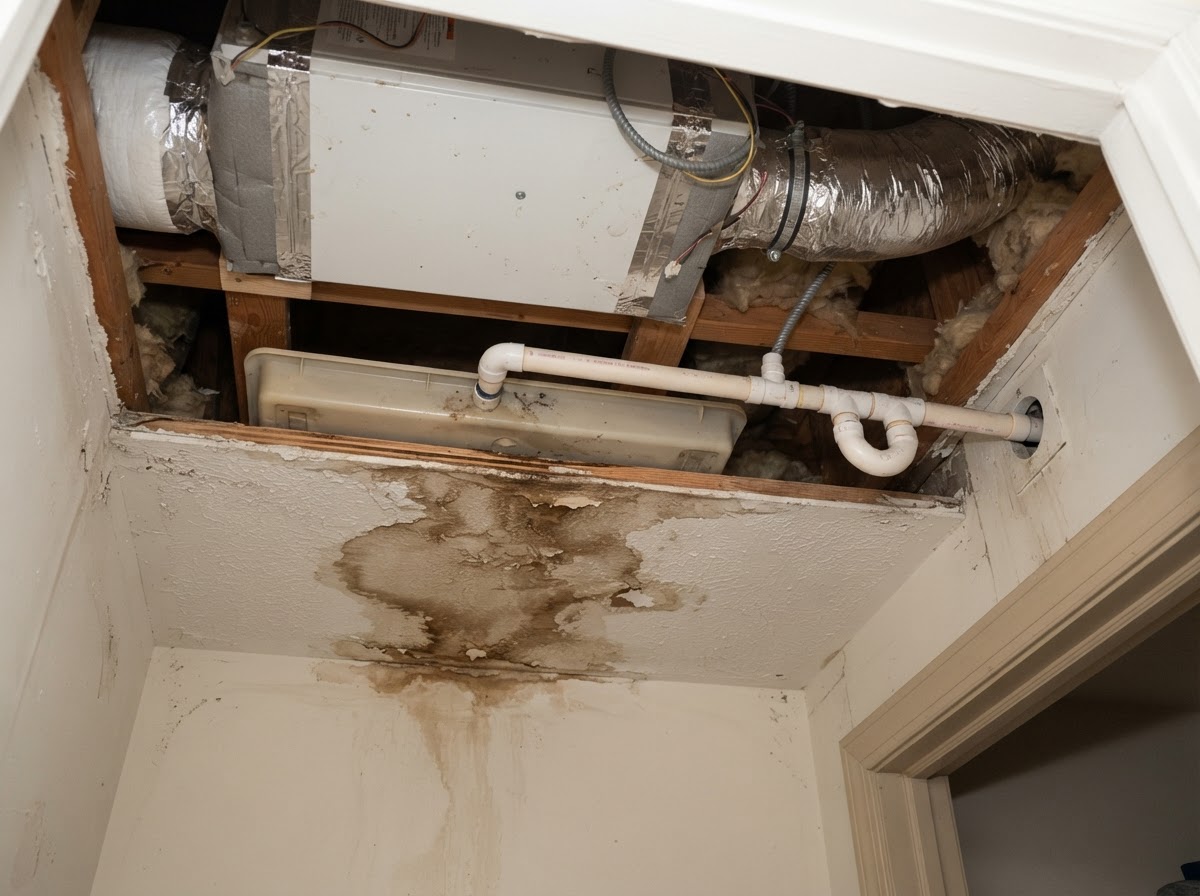
Water near an air handler, a wet HVAC closet, a stained ceiling below an indoor unit, or damp flooring after cooling runs can all point to a condensate drain or overflow problem. The moisture issue and the HVAC cause are separate questions: an HVAC professional addresses the drain system, while restoration addresses the affected building materials. This assessment is an inquiry — not a confirmed HVAC service appointment or a same-day visit.
The problem
How condensate becomes a water problem, and what it is not
- Blocked or clogged condensate drain
- Disconnected or cracked drain line
- Damaged or overflowing drain pan
- Failed or bypassed safety float switch
- Water near an air handler or HVAC closet
- Staining on a ceiling below an indoor unit
- Damp flooring after cooling operation
Process
From a condensate leak to a dry, evaluated interior
HVAC source repair is a separate scope from material restoration. The order depends on whether the source is still active, the materials involved, and the verified provider's scope.
Avoid wet electrical areas
If water is near the air handler, an outlet, or any electrical component, do not touch the equipment or stand in the water. Have the area evaluated for safety before anyone proceeds.Contact a qualified HVAC professional to inspect and correct the source
Clearing or repairing a condensate drain, pan, or safety control is an HVAC scope performed by a qualified technician. A restoration provider does not diagnose or repair the HVAC system.Document the extent of the leak
From a safe position, record the visible staining, the rooms and materials affected, and the timing relative to cooling operation. This helps organize both the assessment and any insurer conversation.Qualified moisture assessment of adjacent materials
The drywall, insulation, ceiling, and flooring near the indoor unit are inspected for moisture that may have spread beyond the visible stain into cavities and under surfaces.Water removal, drying, and cleaning as applicable
Where appropriate, standing water is removed and affected materials are dried or evaluated for removal depending on saturation, contamination, and access.Determine material repair needs and safe re-occupancy considerations
Finishes, insulation, and any cavities are evaluated before the area returns to normal use. A functioning AC after service does not by itself prove the concealed materials are dry — that is confirmed by moisture measurement, not by the unit running.
Materials & scope
Where condensate damage shows up, and how it varies
Repeat leakage, hidden cavities, and the layout of the indoor unit all change what is affected. Material decisions depend on extent, contamination, and exposure — not on an assumption that every unit is configured the same way.
- Attic air-handler settings
- An indoor unit in an attic can leak into ceiling cavities, insulation, and drywall below, where moisture travels before it appears at a stain.
- Closet & utility installations
- Units in closets or utility spaces can wet nearby drywall, baseboards, and the flooring just outside the closet, with limited access to inspect behind the equipment.
- Drain pans & lines
- A cracked or overflowing pan, or a disconnected line, can release water along framing or into a wall cavity before it reaches a visible surface.
- Drywall & insulation
- Ceiling and wall drywall can wick water from above; insulation in the path can hold moisture against framing and may need removal rather than drying.
- Flooring & baseboards
- Water reaching the floor can spread under baseboards and into the underlayment, extending the affected area beyond the closet or unit.
- Shared multifamily pathways
- In multifamily buildings, a unit above or a shared wall can mean the water affects more than one space, which changes how access and communication are handled.
Frequently asked questions
Next steps
Related restoration topics
Live pages with related guidance for Dothan-area property owners.
Describe the AC drain-line damage and request an assessment
Include the system or air-handler location, the visible affected rooms, whether water is still appearing, any HVAC service status, and the property location. The inquiry is reviewed — it is not a confirmed HVAC appointment or a same-day dispatch.