Wiregrass • Appliance Leaks
Appliance Leak Water Damage in Dothan, AL
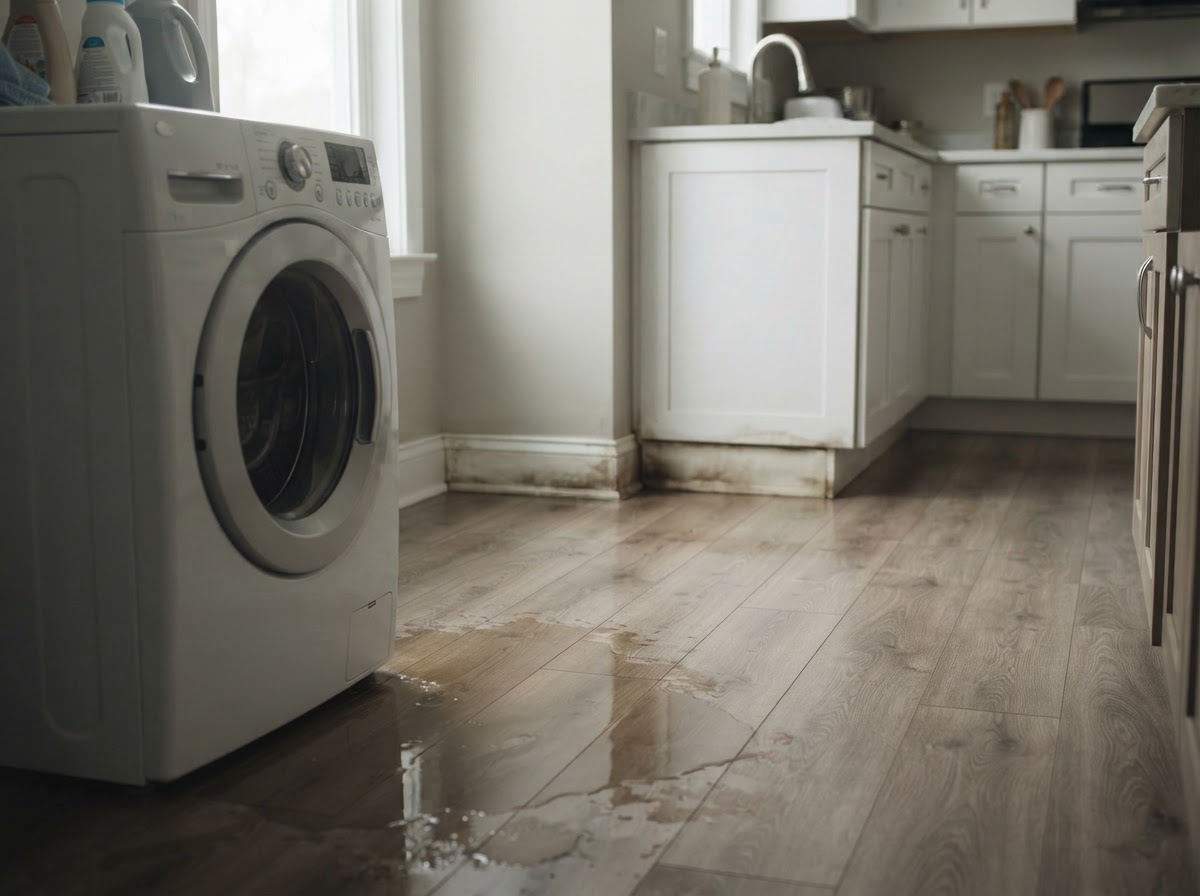
A wet laundry floor, seepage beneath kitchen cabinets, or water that appeared while an appliance was running can mean more than the puddle you can see. Stopping the source safely and determining where the moisture traveled are two separate questions. An assessment inquiry helps clarify both — it does not include appliance diagnosis or repair, and it is not a promise of a same-day visit or a guaranteed outcome.
The problem
Where appliance leaks come from, and what they can hide
- Supply-hose or connection failure
- Drain hose disconnection or blockage
- Worn door seals and gaskets
- Ice-maker tubing leaks
- Overflow or internal float failure
- Condensate-related appliance moisture
- Water that migrated beneath cabinets or finished flooring
Process
From a discovered leak to documented, dry materials
A general sequence for an appliance-related water concern. Which steps apply depends on the appliance, the water category, and the verified provider's scope.
Safe isolation of the appliance and water source
If it can be done safely, the appliance is disconnected from its water and power supply by the appropriate person. Do not reach behind or under equipment near standing water or energized outlets.Inspect nearby cabinets and flooring
Visible water at the base of an appliance is checked against the flooring, toe kicks, and cabinetry around it, where moisture often travels first.Moisture assessment beneath appliances and baseboards
Water can sit under machines and behind lower cabinets where it is difficult to reach. A qualified inspection looks beyond the surface using moisture meters where appropriate.Remove standing water when needed
Extraction of visible water is a distinct step that precedes drying; methods depend on the volume, category, and access.Decisions about wet padding, subfloor, drywall, and cavities
Some materials can be dried and monitored; saturated, contaminated, or structurally compromised materials may need removal rather than salvage.Controlled drying and monitoring if appropriate
Where qualified, equipment and moisture readings are used until target conditions are met. There is no universal drying period for every leak.Separate appliance repair and finish restoration
Fixing the appliance or supply line is a separate scope from restoring affected materials. Finish work, cabinetry, and flooring repair are coordinated independently and are not automatically included.
Materials & scope
What can be affected, and why decisions vary
Leak duration, surface porosity, building-material responses, and access all change what is reasonable. No single answer fits every Dothan home.
- Laminate & vinyl
- Laminate can swell and delaminate along seams; sheet vinyl may hide moisture against the subfloor beneath it.
- Hardwood
- Hardwood may cup or warp; cupped boards can trap moisture against the subfloor and may require specialized drying.
- Tile
- Grout lines can wick water into the underlayment and subfloor even when the tile surface looks intact.
- Lower cabinet bases
- Cabinet backs and toe kicks are hard to reach and dry; water can wick upward through unfinished edges.
- Wallboard & baseboards
- Lower drywall and baseboards absorb water from the floor; sections may need to be opened or removed to dry the cavity behind them.
- Adjacent rooms
- Water travels along seams and under walls into neighboring rooms, so the affected area can extend beyond where the leak was discovered.
Frequently asked questions
Next steps
Related restoration topics
Live pages with related guidance for Dothan-area property owners.
Describe the appliance leak and request an assessment
Include the appliance type, when you discovered it, the visible rooms and materials affected, whether the source is stopped, and the property location. The inquiry is reviewed — it is not a dispatch, booking, quote, or service acceptance.