Resource Guide • Contractor Verification
Hiring a Licensed Restoration Contractor in Alabama
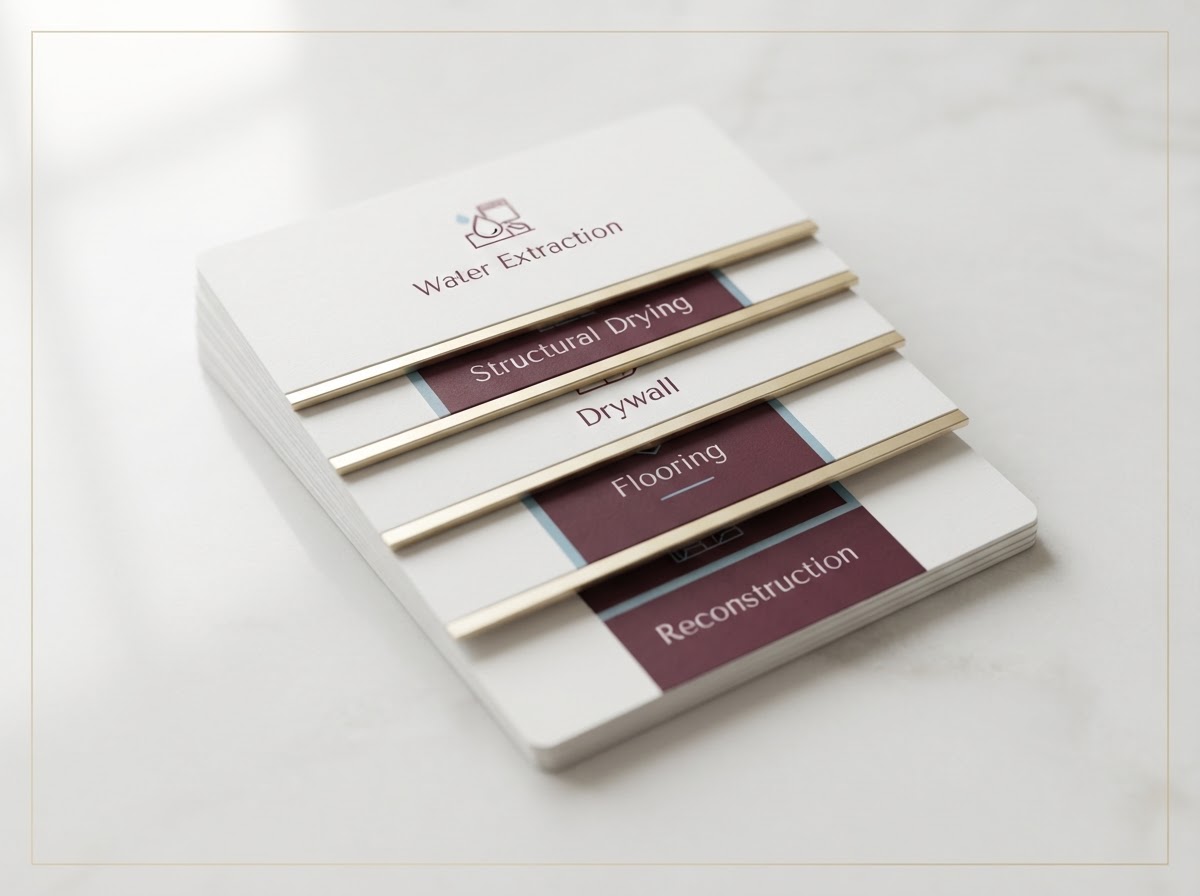
A water, mold, or fire restoration project can involve multiple licensed trades — extraction, structural drying, plumbing, electrical, roofing, HVAC, mold remediation, and reconstruction — and no single "Alabama restoration license" covers all of them. Before hiring, a property owner should verify who contracts for the work, who actually performs it, which state or local credentials apply, and which permits may be required. IICRC certification is a voluntary industry credential and does not replace an Alabama contractor license. This guide explains which licensing questions matter, how to verify a contractor through the correct state authority, and what to ask before signing an agreement. It is educational — it does not verify any specific contractor or claim this business performs every trade.
The problem
What "licensed" means for a specific project
- Legal contracting entity — the business that signs the agreement
- Individual technician — the person performing specific work on site
- Trade subcontractor — a separate qualified provider performing part of the scope
- Responsible contractor — the entity responsible for the contractual scope
- IICRC certification is voluntary and does not replace state licensing
- A contractor may hold one credential without holding the others
Process
Verify through the correct Alabama authority
Each trade has its own licensing board. Confirm the correct one for the work planned.
Identify the trade and scope
Determine whether the project involves general building, roofing, plumbing, electrical, HVAC, mold remediation, or a combination. The trade determines which Alabama board is the correct verification authority.Check the relevant Alabama board
Alabama Home Builders Licensure Board (HBLB) for residential building, remodeling, and roofing. Alabama Licensing Board for General Contractors for broader construction. Alabama Plumbers and Gas Fitters Examining Board for plumbing. Alabama Board of Heating, Air Conditioning and Refrigeration Contractors for HVAC. and the relevant electrical contractor board for electrical work.Confirm active status and classification
Verify the legal name, active license status, classification, and expiration through the board's official roster or verification tool. Search results may require clarification directly from the board. Never accept a license number provided verbally without checking the official source.Review the 2026 licensing changes
The Alabama Licensing Board for General Contractors reported changes to certain licensing exemptions effective October 1, 2026. Review the current board advisory and governing statute to determine whether a specific exemption applies to the actual project scope before relying on older summaries.Verify local permits and business licensing
Check City of Dothan contractor and business licensing requirements for work within city limits, plus any project-specific building permits. Local requirements are separate from state licensing and must be confirmed with the municipal office.
Materials & scope
Questions to ask before signing
A practical checklist covering identity, scope, credentials, and documentation.
- Identity and contracting entity
- Exact legal business name, physical contact, who signs the contract, and who actually performs the work. Confirm whether subcontractors will be used and whether they are separately licensed.
- License and insurance
- Applicable Alabama trade license (verified through the correct board), general liability insurance evidence, and workers' compensation coverage if the contractor has employees. IICRC certification is supplementary, not a substitute.
- Scope and written agreement
- Defined scope of work, materials included and excluded, access authorization, required permits, inspections, change-order process, payment terms, documentation, cleanup, completion conditions, and dispute process — all in writing.
- 2026 law review
- The General Contractors Board's October 2026 exemption changes may affect whether a specific maintenance, repair, or service description requires a license. Review the current advisory and statute for the actual project scope before assuming an exemption applies.
Frequently asked questions
Official Sources & Further Reading
Last reviewed: 2026-11-02Educational guidance compiled for Alabama property owners. Review individual policy contracts, statutory codes, or relevant official agency documentation for specific coverage or legal questions.
- Alabama Home Builders Licensure Board →State of AlabamaOfficial board for residential building, remodeling, and roofing contractor licensing and consumer verification.
- Alabama Licensing Board for General Contractors →State of AlabamaOfficial board for general contractor licensing, including the October 2026 exemption changes.
- General Contractors Board — 2026 Exemption Update →Alabama Licensing Board for General ContractorsOfficial notice of licensing exemption changes effective October 1, 2026.
- Alabama Plumbers and Gas Fitters Examining Board →State of AlabamaOfficial board for plumbing and gas fitting contractor licensing.
- Alabama Board of Heating, Air Conditioning and Refrigeration Contractors →State of AlabamaOfficial board for HVAC contractor licensing.
Next steps
Related restoration topics
Live pages with related guidance for Dothan-area property owners.
Need help coordinating a qualified contractor?
Request a professional restoration assessment for your Dothan or Wiregrass property. We can help coordinate scope documentation, contractor verification questions, and qualified trade coordination for water, mold, or fire restoration.