Wiregrass • Slab Leak
Slab Leak Water Damage in Dothan, AL
Unexplained damp flooring, recurrent wet spots, or a suspected water-line problem beneath a concrete slab can raise two separate questions: what is the plumbing source, and what building materials has the moisture affected? Confirming the actual cause is the work of a qualified plumbing or leak-detection professional. A restoration assessment addresses the flooring and nearby materials — it does not include proprietary leak-location technology, noninvasive guarantees, or a same-day visit.
The problem
Signs that point toward a slab problem, and what they do not prove
- Unexplained dampness or wet flooring
- Warm spots on the floor
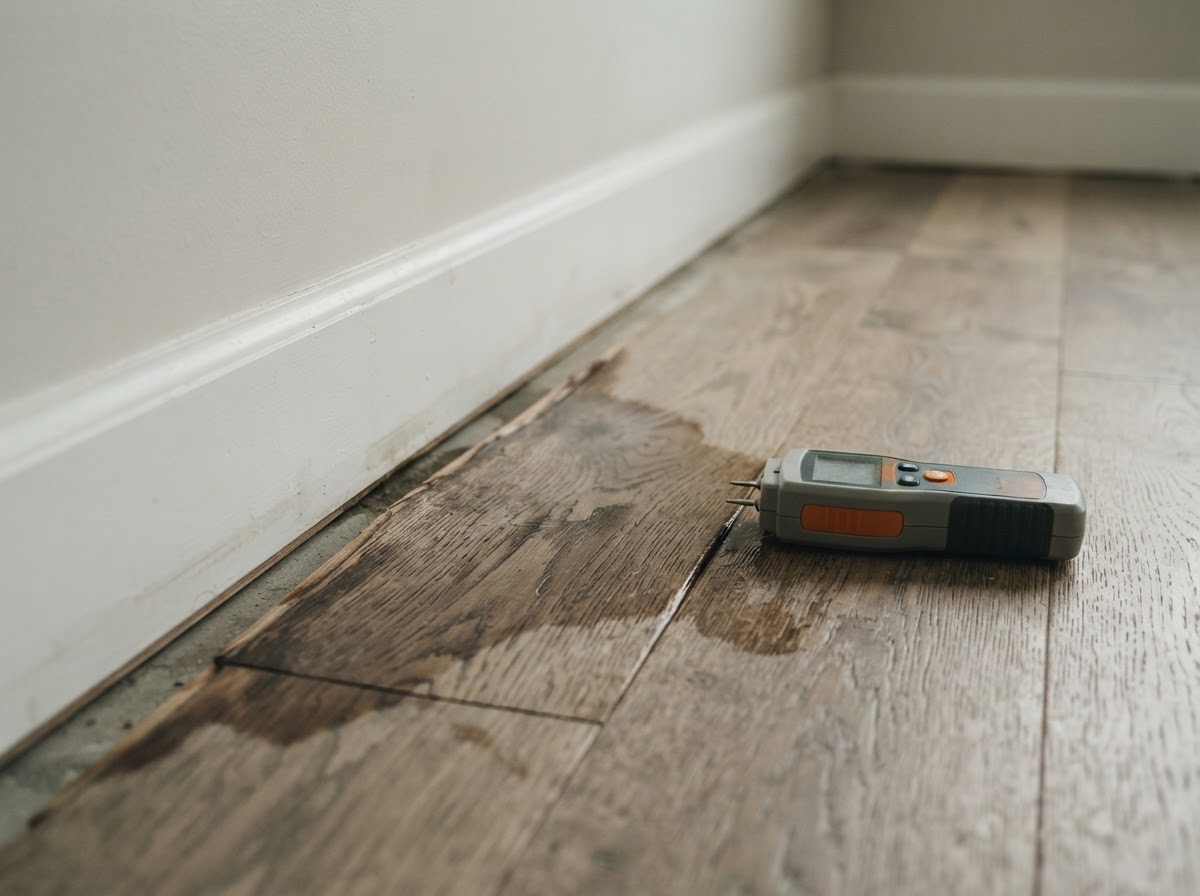
- Moisture collecting at floor edges or baseboards
- Audible running-water concern when fixtures are off
- Water-pressure changes
- Unusual water bills
- Dampness that recurs after the floor is dried
Process
From suspected slab leak to documented, dry materials
Source confirmation comes first, performed by a qualified plumbing or leak-detection professional. Restoration follows, addressing the affected materials — the two are distinct scopes.
Safety review and history
Note when the dampness appeared, where it recurs, and whether any electrical or access hazards are present near the affected flooring.Qualified plumber or leak-detection professional confirms source
Confirming which line is leaking and where is a plumbing scope. A restoration provider does not diagnose or repair the under-slab source; that is performed by an appropriate professional.Evaluate affected flooring, baseboards, cabinets, and moisture paths
After the source is addressed, the materials it wet are inspected for moisture that may have spread beneath impervious finishes or into adjacent areas.Select water removal, drying, or material decisions where warranted
Standing water, if any, is removed and the flooring system is dried or evaluated for removal depending on saturation, contamination, and access.Document condition and coordinate separate reconstruction
Concrete cutting, pipe rerouting, structural engineering, and flooring replacement are coordinated as separate scopes by the appropriate qualified trades — not automatically bundled with restoration.
Materials & scope
Materials and why a slab leak is not a simple flooring problem
Moisture can move under impervious finishes, and access to the source can complicate reinstallation. Reading moisture and diagnosing the source both require professional judgment.
- Tile
- Tile and stone can hide moisture beneath an intact surface; water can travel through grout or underlayment to the slab and beyond.
- Engineered wood & laminate
- Engineered and laminate flooring can swell, cup, or delaminate; moisture beneath them can affect the underlayment and the slab surface.
- Carpet
- Carpet and its padding can hold water against the slab; padding is often removed while carpet may sometimes be dried depending on the source.
- Adhesives & underlayment
- Adhesives and underlayment can trap moisture against the slab, complicating drying and the decision to reinstall or replace.
- Wall base & cabinetry
- Moisture at the floor edge can wick into baseboards and lower cabinetry, extending the affected area beyond the visible damp flooring.
- Adjacent spaces
- Water can travel along the slab surface beneath walls into neighboring rooms, so the inspected area may be larger than the wet spot suggests.
Frequently asked questions
Next steps
Related restoration topics
Live pages with related guidance for Dothan-area property owners.
Describe the suspected slab leak and request an assessment
Include the symptom description, where the wet floors are, any known plumber findings, when it was discovered, and the property location. The inquiry is reviewed — it is not a confirmed diagnosis, a plumbing repair, or a same-day dispatch.